
How Smart Creators Are Building Sustainable Income Beyond the Algorithm
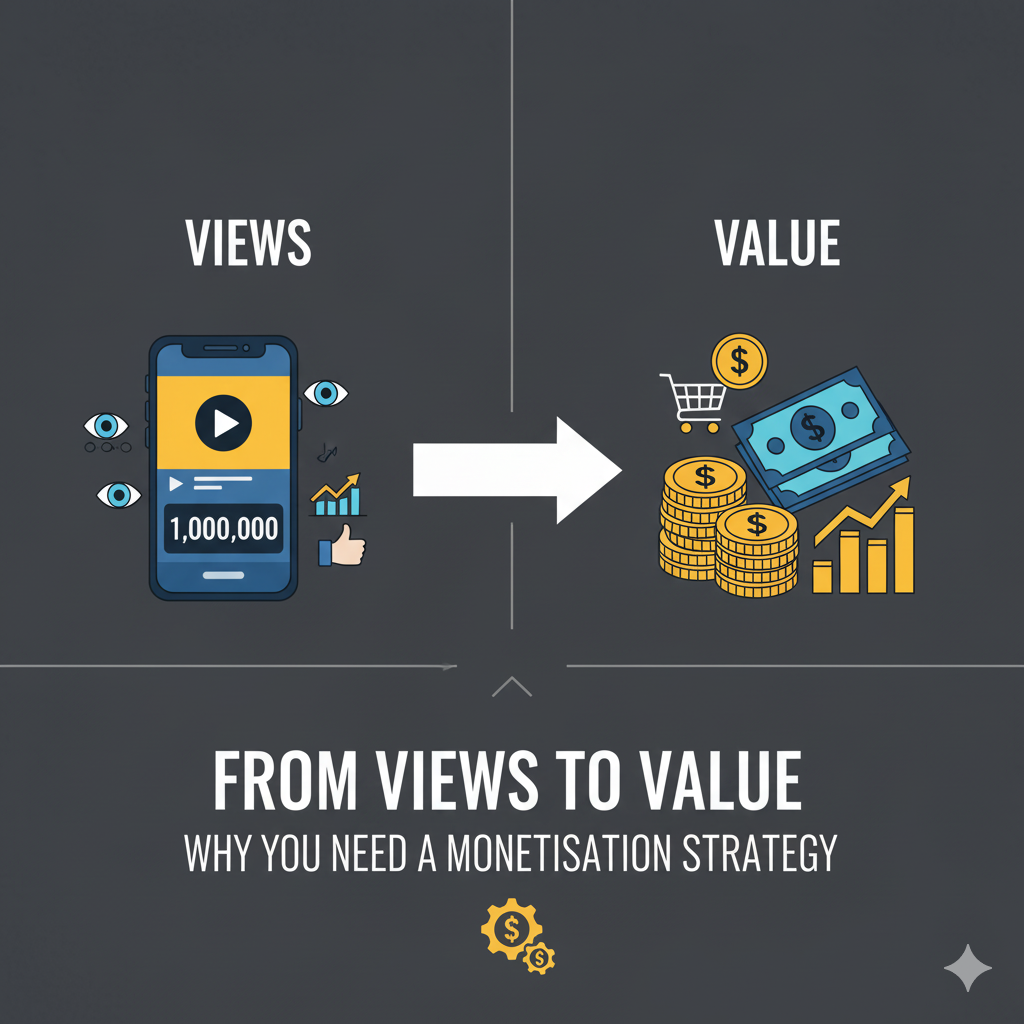
The creator economy is booming, with millions of content creators uploading videos, posting images, and sharing their expertise across platforms daily. Yet despite pulling impressive view counts, the majority of creators struggle to generate meaningful income. The harsh reality? Views alone don’t pay the bills. Understanding the journey from views to value is what separates hobbyists from professionals, and aspiring creators from financially successful entrepreneurs.
The difference between creators who earn six and seven figures versus those who barely cover their equipment costs isn’t talent, luck, or even audience size. It’s having a robust monetisation strategy that transforms attention into revenue. From views to value isn’t just a catchy phrase—it’s the essential framework every creator must master to build a sustainable creative business in today’s digital landscape.
1. The Harsh Reality: Why Views Don’t Equal Income
The fundamental misunderstanding plaguing countless creators is the belief that viral videos and high view counts automatically translate to financial success. This myth has been perpetuated by outlier success stories and algorithmic lottery winners, but the mathematics tell a different story about the journey from views to value.
The CPM Illusion
YouTube’s average CPM (cost per thousand views) ranges between $2 to $12 depending on niche, audience demographics, and advertiser demand. Even at the optimistic end, a video with 100,000 views might generate $400-$1,200 in ad revenue after YouTube takes its cut. For the thousands of hours invested in content creation, equipment, editing, and promotion, this represents substandard compensation at best.
The reality worsens when you consider inconsistency. One month might deliver strong CPM rates; the next month, advertising budgets contract, and your earnings plummet despite similar view counts. Relying exclusively on ad revenue creates financial instability that makes long-term planning impossible.
Platform Dependency Risk
Creators who build their entire income model around a single platform’s monetisation program face existential risks. Algorithm changes can devastate reach overnight. Policy updates might demonetise your entire back catalogue. Platform closures, however unlikely, could eliminate your income stream entirely. The journey from views to value demands diversification beyond platform-controlled revenue sources.
The View-to-Value Disconnect
Views measure attention, but attention doesn’t automatically generate value. A million views from unengaged viewers scrolling past your content holds less value than ten thousand views from a deeply engaged audience that trusts your recommendations and invests in your offerings. Understanding this distinction separates strategic creators from those perpetually chasing vanity metrics.
The Burnout Equation
Chasing views without a monetisation strategy creates a brutal equation: you must constantly produce more content to maintain income, leading to burnout, declining quality, and eventually abandoning creative careers entirely. Smart creators break this cycle by implementing systems that generate revenue independent of their constant content production.
2. Understanding True Value: What Audiences Actually Pay For
The transformation from views to value begins with understanding what audiences genuinely value and willingly pay for. It’s not just entertainment or information—it’s transformation, connection, and solutions to their specific problems.
Transformation Over Information
In the information age, facts are abundant and free. What’s valuable is curated, actionable information that facilitates transformation. Audiences pay for courses that teach marketable skills, programs that deliver specific outcomes, and coaching that accelerates their progress toward goals. Your monetisation strategy should focus on delivering transformation rather than mere information.
Access and Exclusivity
People pay premium prices for access others don’t have. This might be early access to content, exclusive behind-the-scenes material, direct interaction with you, or membership in exclusive communities. The scarcity principle applies: limited access creates perceived value that commands higher prices than universally available content.
Convenience and Time-Saving
Audiences will pay handsomely for solutions that save time or simplify complex processes. Templates, done-for-you services, plugins, and tools that eliminate friction or accelerate results represent high-value offerings. The journey from views to value accelerates when you package your expertise into time-saving solutions.
Community and Belonging
Humans crave connection and belonging. Creating communities where like-minded individuals gather, support each other, and share experiences generates tremendous value. Membership programs, private forums, and exclusive groups satisfy this need while creating recurring revenue streams.
Personalisation and Customisation
Generic content is commoditised; personalised solutions command premium pricing. One-on-one consulting, custom services, and tailored solutions represent the highest tier of value creation. While less scalable than digital products, they often generate the most revenue per transaction.
3. Building Your Monetisation Foundation: Multiple Revenue Streams
A robust strategy for moving from views to value requires multiple revenue streams that work synergistically. Relying on a single income source creates vulnerability; diversification creates stability and growth potential.
Direct Audience Monetisation
Your most valuable asset is your audience’s attention and trust. Direct monetisation captures this value without intermediaries taking substantial cuts. Platforms like Patreon, Buy Me a Coffee, and Ko-fi allow audiences to support you directly through monthly memberships or one-time contributions.
The key is offering clear value propositions for each support tier. Free content attracts audiences; paid tiers deliver premium experiences that justify the investment. Consider offering exclusive content, early access, ad-free experiences, or direct communication channels for supporters.
Digital Products
Digital products represent the holy grail of creator monetisation—high profit margins, infinite scalability, and passive income potential. Ebooks, online courses, templates, presets, plugins, stock assets, and software tools can be created once and sold indefinitely. The transition from views to value accelerates dramatically when you develop digital product offerings.
Successful digital products solve specific problems for defined audiences. A photography educator might sell Lightroom presets. A business consultant might offer proposal templates. A fitness creator might provide meal planning guides. Your digital products should leverage your unique expertise while addressing audience pain points.
Services and Consulting
High-ticket services generate substantial revenue from smaller client bases. Consulting, coaching, done-for-you services, and freelance offerings capitalize on your expertise directly. While less scalable than digital products, services often prove easier to sell initially and provide market validation for future product development.
Start with services to generate immediate income and understand client needs deeply. This market intelligence informs better digital product development while your service revenue funds business growth.
Affiliate Marketing
Recommending products you genuinely use and believe in generates commissions while providing value to audiences. The journey from views to value includes affiliate marketing when done authentically. Audiences trust your recommendations; affiliate partnerships monetise that trust ethically.
Focus on relevant, high-quality products with generous commission structures. Disclosure is legally required and ethically essential—audiences appreciate transparency about affiliate relationships. Strategic affiliate marketing can generate substantial passive income as your content library grows.
Sponsorships and Brand Deals
As your audience grows, brands pay for access to your attention and influence. Sponsorships represent lucrative opportunities but require careful curation to maintain audience trust. Only partner with brands whose products align with your values and genuinely benefit your audience.
Negotiate rates based on engagement metrics rather than just view counts. A smaller, highly engaged audience often delivers better brand results than larger, passive audiences, justifying premium rates. Long-term brand partnerships provide income stability while one-off sponsorships offer flexibility.
Physical Products
Merchandise extends your brand into the physical world while generating additional revenue. T-shirts, hoodies, mugs, and custom products allow fans to support you while displaying their affiliation. Print-on-demand services eliminate inventory risk, making merchandise accessible even for smaller creators.
Consider physical products that align with your niche: a cooking channel might sell branded kitchen tools, while a productivity creator could offer physical planners. The key is creating products audiences genuinely want rather than generic merchandise plastered with logos.
4. Audience Segmentation: Understanding Who Pays and How Much
The transition from views to value requires understanding that not all audience members represent equal monetisation potential. Strategic segmentation allows you to serve different audience segments appropriately while maximising revenue.
The Audience Value Pyramid
Visualise your audience as a pyramid. At the base, casual viewers consume free content occasionally. They represent the largest segment but lowest individual value. Moving up, regular viewers consistently engage with your content. Above them, engaged community members participate in comments, shares, and discussions. Near the top, paying customers purchase your products or services. At the apex, VIP clients invest heavily in premium offerings or become brand ambassadors.
Your monetisation strategy should serve each level appropriately. Free content attracts and nurtures the base. Mid-tier offerings convert engaged viewers into customers. Premium services capture maximum value from your most invested audience members.
The 1% Rule
Expect approximately 1% of your audience to become paying customers under typical conditions. A channel with 100,000 subscribers might convert 1,000 into buyers. Understanding this conversion reality prevents disappointment and informs growth strategies. Growing your free audience expands your potential customer pool while optimising conversion rates increases revenue without requiring audience growth.
Buyer Personas and Psychographics
Demographics tell you who your audience is; psychographics reveal why they buy. Develop detailed buyer personas for different customer segments. What problems do they face? What outcomes do they desire? What price points can they afford? What objections prevent purchases?
This deep understanding informs product development, pricing strategies, and marketing messaging. The journey from views to value accelerates when you intimately understand buyer motivations and decision-making processes.
Lifetime Value Optimization
Focus on maximising customer lifetime value rather than optimising single transactions. A customer who purchases a $50 product today might spend thousands over years through repeat purchases, upgrades, and referrals. Treating customers exceptionally increases retention, referrals, and lifetime value.
Develop customer journeys that guide buyers from entry-level products to premium offerings naturally. This value ladder approach increases revenue per customer while serving their evolving needs.
5. Pricing Psychology: Charging What You’re Worth
Many creators undercharge dramatically, leaving enormous revenue on the table. The transformation from views to value requires mastering pricing psychology and confidently charging prices that reflect the true value you deliver.
Value-Based Pricing
Price based on the value you deliver, not your costs or competitors’ prices. If your course helps someone earn an extra $10,000 annually, charging $997 is a no-brainer investment. If your software saves businesses 10 hours weekly, it’s worth thousands in monthly subscription fees.
Calculate the tangible and intangible benefits your offerings provide. Time saved, money earned, stress reduced, and goals achieved all represent quantifiable value that justifies premium pricing.
The Anchoring Effect
First prices create psychological anchors that influence perception of subsequent prices. Present your highest-priced offering first to make mid-tier options seem more affordable. This anchoring effect increases average order values significantly.
Decoy Pricing
Offer three tiers where the middle option represents the best value. Most customers avoid extremes—they won’t choose the cheapest option (perceived as inadequate) or the most expensive (perceived as excessive). The middle tier becomes the natural choice when positioned as the optimal value.
Premium Positioning
Don’t compete on price—compete on value. Premium pricing signals quality and exclusivity. Discount positioning attracts price-sensitive customers who generate higher support costs and lower lifetime values. Premium positioning attracts serious buyers willing to invest in quality solutions.
The journey from views to value often requires raising prices dramatically. You’ll lose some price-sensitive prospects but attract better customers who value your work appropriately.
Price Testing and Optimization
Test different price points to identify optimal pricing. You might discover that doubling your price only reduces conversions by 20%, resulting in 60% revenue increase. Don’t assume lower prices equal higher profits—often the opposite proves true.
6. The Content-to-Commerce Pipeline: Converting Viewers to Customers
Free content attracts audiences; strategic systems convert viewers into customers. Understanding the content-to-commerce pipeline is essential for navigating from views to value successfully.
The Awareness Stage
Free content on public platforms generates awareness and attracts potential customers. YouTube videos, podcast episodes, blog posts, and social media content introduce audiences to your expertise and personality. This content should provide genuine value while naturally pointing toward deeper solutions available through paid offerings.
The Consideration Stage
Engaged viewers begin considering whether investing in your paid offerings makes sense. Email sequences, lead magnets, free challenges, and webinars nurture this consideration phase. Provide additional value while demonstrating expertise and addressing objections that prevent purchases.
The Conversion Stage
Strategic sales sequences convert interested prospects into paying customers. Sales pages clearly articulate problems, present your solution, provide social proof, and create urgency. Email campaigns remind prospects of your offering and address remaining objections.
The Retention Stage
Customer acquisition is expensive; retention is profitable. Deliver exceptional experiences that exceed expectations, turning customers into repeat buyers and brand advocates. Follow-up sequences encourage reviews, referrals, and feedback while introducing complementary products.
The Advocacy Stage
Delighted customers become your most effective marketing channel. Create referral programs, affiliate opportunities, and case study features that incentivise and celebrate advocacy. The journey from views to value culminates when customers enthusiastically recommend your offerings to others.
7. Platform Strategy: Where to Build Your Monetisation Ecosystem
Different platforms serve different roles in your monetisation strategy. Understanding where to focus energy maximises the transition from views to value while minimising wasted effort.
Content Platforms vs. Monetisation Platforms
Distinguish between platforms that build audiences and platforms that capture revenue. YouTube, TikTok, Instagram, and podcasting are primarily audience-building platforms. Your website, email list, Patreon, and course platforms are monetisation platforms. Your strategy should drive traffic from audience-building platforms to monetisation platforms you control.
The Email List Imperative
Email remains the highest-ROI marketing channel and the foundation of sustainable creator businesses. Platform algorithms change; email lists you own and control. Every piece of content should encourage email list growth. Your list represents your true audience—people who’ve explicitly opted to hear from you.
Building Your Digital Home
Your website serves as your digital headquarters—the only platform you fully control. While social platforms drive traffic, your website hosts your products, captures emails, and establishes credibility. Invest in professional website development that reflects your brand and facilitates conversions.
Multi-Platform Distribution
Don’t put all your eggs in one platform basket. Distribute content across multiple platforms to maximise reach and reduce dependency risk. Repurpose content strategically: turn YouTube videos into podcast episodes, blog posts, and social media clips. This maximises content ROI while meeting audiences where they prefer consuming content.
Platform-Specific Monetisation Features
Leverage platform-native monetisation features when beneficial. YouTube’s membership program, Patreon integration, Twitter’s subscription feature, and Instagram’s shopping capabilities provide additional revenue streams. However, prioritise building owned channels that platforms can’t eliminate through policy changes.
8. Systems and Automation: Scaling Beyond Your Time
The journey from views to value hits a ceiling when income is directly tied to your time. Building systems and automation breaks this ceiling, allowing revenue growth without proportional time investment.
Automated Sales Funnels
Sales funnels guide prospects from awareness to purchase automatically. Once built, they work 24/7 without your involvement. Email sequences nurture leads, sales pages present offers, and payment systems process transactions automatically.
Invest time upfront building effective funnels that generate consistent revenue with minimal ongoing input. Test and optimise continuously but focus on automation over manual sales processes.
Evergreen Content Strategy
Create content that remains relevant and valuable indefinitely. Evergreen content continues attracting viewers and generating revenue years after publication. Tutorials, foundational concepts, and timeless advice deliver better long-term ROI than trend-based content.
Product Delivery Automation
Digital product delivery should be completely automated. Payment triggers instant access to courses, downloads begin automatically, and welcome sequences onboard customers without your involvement. Manual fulfilment processes don’t scale and create unnecessary bottlenecks.
Customer Support Systems
As your customer base grows, support demands can overwhelm you. Implement systems that reduce support burden: comprehensive FAQs, video tutorials, community forums where customers help each other, and chatbots handling common questions. Outsource remaining support to virtual assistants as revenue allows.
Financial and Analytics Automation
Track revenue, expenses, and key metrics automatically through integrated tools. Understand which products generate the most profit, which marketing channels deliver best ROI, and which content converts most effectively. Data-driven decisions optimise the transition from views to value continuously.
9. Common Monetisation Mistakes That Kill Creator Businesses
Understanding what not to do is as important as knowing correct strategies. These common mistakes derail countless creator monetisation efforts and prevent the transformation from views to value.
Monetising Too Late
Many creators delay monetisation until reaching arbitrary milestones—100,000 subscribers, one million views, or perfect content quality. This delays revenue unnecessarily and prevents validating monetisation strategies early when adjustments are easier. Start monetising immediately, even with small audiences. Early adopters often become your most valuable customers and provide crucial feedback.
Copying Others’ Strategies Blindly
What works for one creator may fail for another based on audience differences, niche dynamics, and personal strengths. Study successful monetisation strategies but adapt them to your unique situation rather than copying blindly. Your monetisation strategy should reflect your audience’s needs and your authentic strengths.
Neglecting Product-Market Fit
Creating products you want to make rather than products your audience wants to buy is a costly mistake. Validate demand before investing heavily in product creation. Survey your audience, analyse questions you receive repeatedly, and test minimum viable products before fully developing expensive offerings.
Underinvesting in Marketing
Building quality products is insufficient; people must know they exist. Allocate substantial resources to marketing, treating it as equally important as product creation. The best product poorly marketed will underperform a mediocre product with excellent marketing.
Ignoring Customer Feedback
Your customers provide invaluable intelligence about what works, what doesn’t, and what they want next. Regularly solicit feedback, actually read reviews, and implement improvements based on customer input. This customer-centric approach improves products while building loyalty.
Chasing Shiny Objects
New monetisation opportunities emerge constantly. Resist the temptation to chase every trend or platform. Focus on mastering one monetisation channel before adding others. Depth beats breadth—one monetisation strategy executed excellently outperforms multiple strategies executed poorly.
10. Building Long-Term Sustainability: The Creator Business Mindset
Sustainable creator businesses require shifting from content creator mindset to entrepreneur mindset. The ultimate transition from views to value involves building a business that generates income independent of constant content production.
Treating It Like a Real Business
Stop thinking of yourself as a content creator; start thinking as a business owner. This means tracking finances properly, paying taxes, investing in business infrastructure, and making strategic decisions based on profitability rather than just passion.
Investing in Business Growth
Reinvest profits into business growth rather than treating all revenue as personal income. Hire help for tasks outside your expertise, invest in better equipment and tools, pay for advertising to accelerate growth, and develop better products. Businesses that reinvest grow exponentially compared to those extracting all profits immediately.
Building Brand Equity
Your brand represents accumulated trust, recognition, and positive associations. Protect and grow brand equity through consistent quality, ethical practices, and authentic communication. Brand equity compounds over time, making monetisation increasingly easier as your reputation grows.
Developing Intellectual Property
Create proprietary frameworks, methodologies, and systems that differentiate your offerings. Intellectual property creates defensible competitive advantages and premium pricing power. The journey from views to value accelerates when you own unique intellectual property audiences can’t find elsewhere.
Planning for Scale and Exit
Think long-term about where your creator business is headed. Can it scale beyond your personal involvement? Could you sell it eventually? Building systems, documenting processes, and creating assets independent of your constant involvement increases business value and options.
Continuous Learning and Adaptation
The creator economy evolves rapidly. Commit to continuous learning about monetisation strategies, business development, marketing tactics, and industry trends. Attend conferences, join mastermind groups, invest in courses and coaching. Your business grows only as fast as you do.
Conclusion: Your Roadmap From Views to Value
The transformation from views to value isn’t a mysterious process reserved for the lucky few—it’s a strategic journey anyone can navigate with proper understanding and execution. Views attract attention; value captures revenue. The difference between struggling creators and thriving creator entrepreneurs is implementing monetisation strategies that transform attention into sustainable income.
Your roadmap begins with acknowledging that views alone are insufficient. You must understand what audiences truly value, build multiple revenue streams that reduce platform dependency, segment your audience appropriately, price confidently based on transformation delivered, create systems that convert viewers to customers, leverage appropriate platforms strategically, automate wherever possible, avoid common mistakes, and think long-term about business sustainability.
The creator economy offers unprecedented opportunities for individuals to build meaningful businesses around their expertise and passions. But opportunity alone doesn’t guarantee success. From views to value requires strategic thinking, consistent execution, and treating your creative work as the business it is.
Start where you are with what you have. Implement one monetisation strategy excellently before adding others. Test, measure, optimise, and scale what works. Focus on delivering exceptional value that justifies premium pricing. Build owned audiences through email lists and websites. Automate repetitive processes to scale beyond your time. Learn continuously and adapt to changing conditions.
The journey from views to value is challenging but infinitely rewarding. You’ll transform from someone hoping views translate to income into a strategic entrepreneur building a sustainable creative business. Your work deserves to be compensated appropriately. Your expertise provides genuine value worth paying for. Your audience wants to support you—they just need clear opportunities and compelling reasons to invest.
The choice is yours: continue chasing views while struggling financially, or implement a monetisation strategy that transforms attention into the sustainable income your creative work deserves. The path from views to value awaits. Every successful creator business started exactly where you are now. The difference? They took the first step and committed to the journey.
Your monetisation strategy isn’t about selling out or compromising artistic integrity—it’s about ensuring you can continue creating the content your audience loves while building financial stability that supports your creative vision long-term. That’s the true transformation from views to value: creating sustainable businesses that serve audiences exceptionally while rewarding creators appropriately.
The time to build your monetisation strategy is now. Your future self, liberated from financial stress and empowered to create freely, will thank you for taking action today.
Also read this:
Making $10K/Month From One Digital Product — The New Normal