
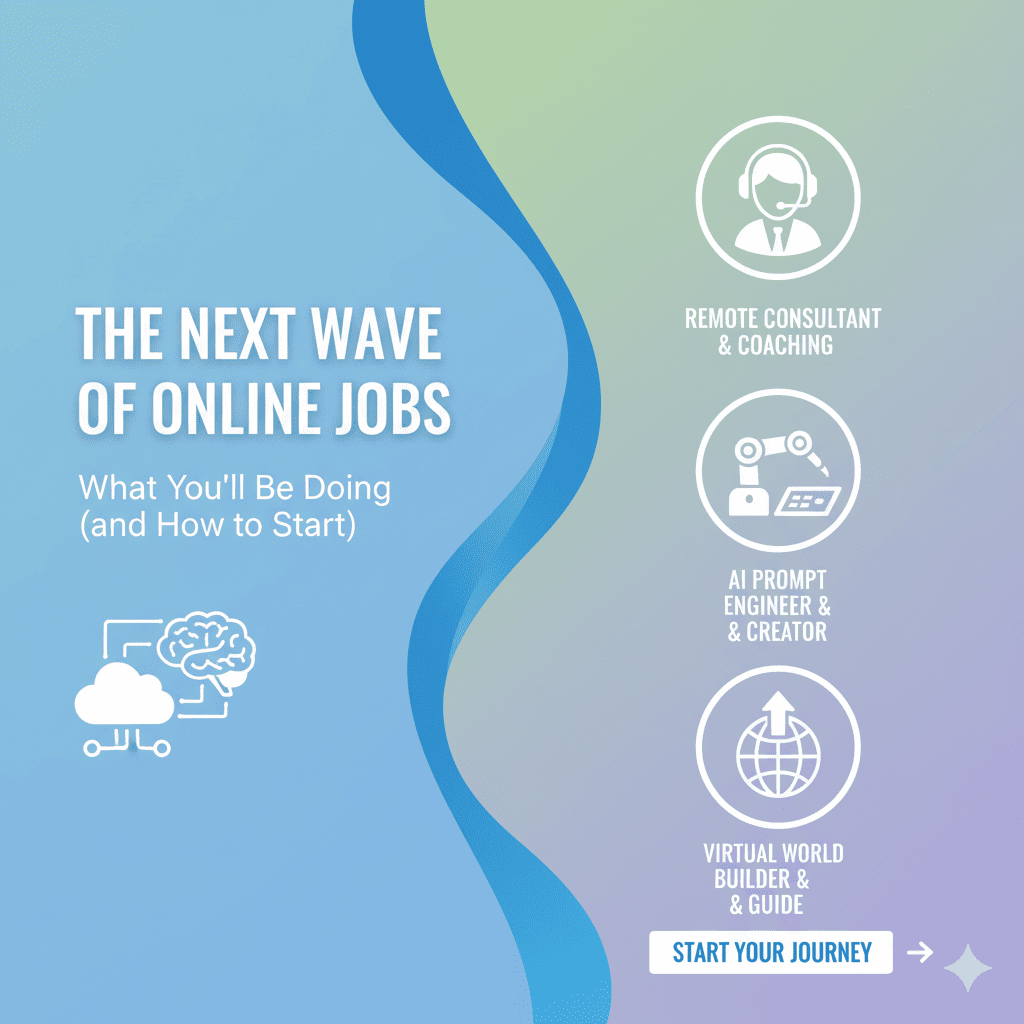
The landscape of work is transforming at an unprecedented pace, with online jobs evolving far beyond traditional remote positions. As technology advances and global connectivity deepens, entirely new categories of digital employment are emerging—roles that didn’t exist five years ago and opportunities that blend creativity, technology, and entrepreneurship in revolutionary ways. Whether you’re seeking to escape the traditional 9-to-5, build multiple income streams, or simply explore the cutting edge of the digital economy, understanding the next wave of online jobs is essential for career planning in the 2020s and beyond.
1. AI Prompt Engineering: Crafting the Future of Online Jobs
One of the most exciting and accessible new categories of online jobs is AI prompt engineering—the art and science of communicating effectively with artificial intelligence systems to produce desired outputs. As AI tools like ChatGPT, Claude, Midjourney, and countless specialized models become integral to business operations, companies desperately need professionals who can bridge the gap between human intent and machine capability.
AI prompt engineers craft the instructions, questions, and frameworks that guide AI systems to generate useful content, solve problems, and automate tasks. This role requires no traditional programming knowledge, making it one of the most accessible high-paying online jobs for people from diverse backgrounds. Instead, success depends on linguistic precision, creative thinking, systematic testing, and deep understanding of how AI models interpret and respond to different types of input.
The earning potential for AI prompt engineering among online jobs is substantial. Freelance prompt engineers charge anywhere from $50 to $200 per hour, while full-time positions at tech companies offer salaries ranging from $80,000 to $175,000 annually. The field is so new that formal credentials matter less than demonstrable skill—building a portfolio of effective prompts and documented results can launch your career.
How to start in this online job: Begin by extensively using major AI platforms to understand their capabilities and limitations. Practice creating prompts for different use cases—content generation, data analysis, creative projects, problem-solving. Document your most effective prompt strategies and the results they produce. Join online communities like the Prompt Engineering subreddit or Discord servers where professionals share techniques. Consider taking courses on platforms like Coursera or LinkedIn Learning that cover prompt engineering fundamentals. Build a portfolio website showcasing before-and-after examples of your prompts and their outputs, then start offering services on platforms like Upwork or directly to businesses in your network.
The versatility of AI prompt engineering makes it one of the most future-proof online jobs. As AI becomes more sophisticated, the need for skilled intermediaries who can optimize human-AI collaboration will only increase. Specializing in specific industries—healthcare prompts, legal research prompts, marketing prompts—can help you command premium rates and establish yourself as an expert in this burgeoning field.
2. Virtual World Builders: Creating Digital Spaces in Growing Online Jobs
The metaverse and virtual worlds represent a massive growth area for online jobs, with companies investing billions in digital environments where people will work, play, socialize, and shop. Virtual world builders design, construct, and maintain these digital spaces using platforms like Unreal Engine, Unity, Roblox Studio, and emerging metaverse development tools.
Unlike traditional game development, virtual world building for online jobs focuses on creating persistent, social spaces rather than goal-oriented games. These environments serve as virtual offices, event venues, retail stores, educational campuses, and entertainment destinations. Brands like Gucci, Nike, and Coca-Cola are establishing metaverse presences, creating demand for builders who can translate brand identities into immersive digital experiences.
The technical requirements for virtual world building have become more accessible, making this one of the online jobs that welcomes self-taught creators. While advanced positions require programming knowledge, many entry-level opportunities focus on visual design, spatial planning, and user experience—skills that architects, interior designers, and graphic designers can readily adapt to digital spaces.
How to start in this online job: Choose a platform to master—Roblox Studio is excellent for beginners due to its large user base and relatively simple learning curve, while Unreal Engine offers more advanced capabilities for professional projects. Complete free tutorials from the platform providers and YouTube creators. Start building your own virtual spaces, focusing on specific niches like concert venues, retail showrooms, or social hangouts. Join platform-specific creator communities where you can get feedback and find collaboration opportunities. Consider offering free or low-cost services to small businesses wanting to establish metaverse presences, building your portfolio and testimonials. As your skills develop, list your services on platforms like Fiverr or Upwork, or apply directly to metaverse development agencies.
The earning potential among online jobs in virtual world building varies widely based on specialization and experience. Entry-level builders might earn $25-$50 per hour, while experienced developers with technical skills can command $100-$250 per hour. Some creators also earn ongoing revenue from virtual worlds they own, selling virtual goods or charging admission fees—a passive income dimension rare in traditional online jobs.
3. Synthetic Data Creation: Fueling AI Through Specialized Online Jobs
As artificial intelligence systems require massive amounts of training data, synthetic data creation has emerged as one of the most intellectually engaging online jobs. Synthetic data creators generate artificial datasets that train AI models without privacy concerns or data scarcity limitations that plague real-world data collection.
This field encompasses various specializations within online jobs. Some creators focus on visual data, generating thousands of labeled images for computer vision training. Others create text datasets for natural language processing, writing diverse examples of how people might phrase questions or requests. Audio synthetic data creators produce speech samples in different accents, tones, and contexts. The work combines creativity with systematic thinking, as creators must produce data that accurately represents real-world diversity while following strict labeling and formatting requirements.
The importance of synthetic data to AI development makes this one of the most recession-resistant online jobs. As long as companies are developing AI systems—and investment in AI continues accelerating—demand for quality synthetic data will remain strong. Major tech companies, AI startups, and specialized data companies all hire synthetic data creators, offering both project-based and ongoing opportunities.
How to start in this online job: Begin by understanding AI training data requirements through online courses about machine learning fundamentals. Platforms like Scale AI, Appen, and Lionbridge hire data annotators and creators—start with their entry-level positions to learn industry standards. These roles often pay modestly ($15-$25 per hour) but provide crucial experience. As you develop expertise in specific data types, consider specializing in high-value niches like medical imaging data, legal document datasets, or multilingual text data. Build relationships with AI companies in your chosen specialty and pitch custom synthetic data services. Advanced practitioners can develop automated tools for synthetic data generation, offering scalable solutions that command premium rates—$75-$150 per hour or project-based fees reaching tens of thousands of dollars.
The intellectual stimulation of synthetic data creation distinguishes it from more repetitive online jobs. You’re essentially creating the educational materials that teach AI systems to understand the world—a role that requires deep thinking about representation, diversity, edge cases, and the nuances of human language, vision, and interaction.
4. Digital Wellness Coaching: Supporting Mental Health in Online Jobs
The shift to remote and hybrid work has created unprecedented demand for digital wellness coaching—one of the online jobs that combines technology with human connection. Digital wellness coaches help individuals and organizations navigate the psychological, physical, and social challenges of screen-based work and life, teaching strategies for maintaining wellbeing in increasingly digital environments.
This emerging category of online jobs addresses issues like digital burnout, tech addiction, work-life boundary erosion, and the social isolation that can accompany remote work. Coaches work one-on-one with clients or facilitate group programs for companies concerned about employee wellbeing. The work can be conducted entirely online through video calls, messaging platforms, and specialized coaching software.
Digital wellness coaching stands out among online jobs for its meaningful impact and personal fulfillment. Coaches report high job satisfaction from helping clients develop healthier relationships with technology and work. The field also offers flexibility—coaches can build practices around their own schedules and choose whether to work independently or with organizations.
How to start in this online job: While no single credential is required, most successful digital wellness coaches have backgrounds in psychology, counseling, health coaching, or related fields. If you lack formal qualifications, consider certification programs in health coaching (National Board for Health & Wellness Coaching), mindfulness instruction (Mindfulness-Based Stress Reduction), or digital wellbeing (emerging programs from universities and specialized institutes). Simultaneously, develop deep knowledge of digital wellbeing research by reading academic journals, following thought leaders, and staying current on technology’s psychological impacts. Start offering free or low-cost coaching to build testimonials and refine your approach. Create content—blog posts, social media, podcast appearances—establishing yourself as a knowledgeable voice in digital wellness. Reach out to companies with remote workforces, offering workshops or ongoing coaching programs. List your services on coaching directories and platforms like BetterUp or Noomii. Rates for digital wellness coaching range from $75-$200 per hour for individual sessions, with corporate programs commanding significantly higher fees.
The growth trajectory for this category of online jobs appears strong as awareness of digital wellbeing issues increases and companies recognize the productivity and retention costs of burnout. Specializing in specific populations—executives, parents, students, healthcare workers—can help differentiate your practice in this expanding field.
5. No-Code/Low-Code Development: Building Without Programming in Online Jobs
No-code and low-code development represents a democratization of tech creation, making software building one of the most accessible online jobs for people without traditional computer science backgrounds. These platforms allow developers to create functional applications, websites, and automation workflows using visual interfaces, drag-and-drop components, and pre-built templates rather than writing code from scratch.
The explosion of no-code platforms like Webflow, Bubble, Airtable, Zapier, and countless specialized tools has created robust demand for developers who can leverage these systems effectively. Businesses increasingly prefer no-code solutions for their speed, cost-effectiveness, and maintainability compared to custom-coded software. This shift creates opportunities for a new generation of online jobs focused on rapid application development and business automation.
No-code developers among online jobs typically specialize in specific platforms or use cases. Some focus on building websites with Webflow or Wix, others create business applications with Bubble or Glide, and still others design automation workflows connecting various business tools. The versatility of these skills means no-code developers can serve clients across virtually every industry.
How to start in this online job: Choose one or two no-code platforms to master based on market demand and your interests. Webflow is excellent for web design-oriented developers, Bubble for application builders, and Zapier for automation specialists. Most platforms offer free tiers and extensive documentation—work through official tutorials to understand capabilities. Build projects for yourself, friends, or non-profits to develop your portfolio. Join platform-specific communities on Slack, Discord, or forums where you can ask questions, find collaborators, and discover client leads. Create tutorials or case studies showcasing your projects, establishing credibility and improving your own understanding. Start offering services on platforms like Upwork, Fiverr, or Contra, or reach out directly to small businesses that could benefit from no-code solutions. Entry-level no-code developers earn $30-$60 per hour, while experienced specialists command $75-$150 per hour or more. Some developers also create no-code templates or plugins, generating passive income streams alongside client work.
The future of no-code development in online jobs looks particularly bright as platforms become more powerful and businesses face ongoing pressure to digitize quickly and affordably. The skills translate well across technologies, so investing time in learning no-code development builds transferable capabilities valuable throughout your career.
6. Virtual Events Production: Orchestrating Digital Experiences in Online Jobs
The pandemic accelerated adoption of virtual events, and this category of online jobs has evolved from emergency substitute for in-person gatherings into a sophisticated industry with its own best practices, technologies, and career paths. Virtual events producers orchestrate online conferences, webinars, product launches, concerts, and networking events, managing the technical, creative, and logistical elements that make digital gatherings engaging and effective.
Modern virtual events production among online jobs requires diverse skills—technical proficiency with platforms like Zoom, Hopin, or StreamYard; creative understanding of how to maintain audience engagement in digital environments; project management capabilities to coordinate speakers, sponsors, and vendors; and problem-solving abilities to handle the inevitable technical issues. Producers might work as freelancers serving multiple clients or as specialists within marketing agencies or corporations.
The scope of virtual events production in online jobs ranges from intimate webinars with dozens of attendees to massive conferences with thousands of participants across multiple time zones. Each scale presents unique challenges and requires different approaches. Successful producers develop signature styles and specializations—some focus on high-energy entertainment events, others on professional conferences, and still others on intimate networking experiences.
How to start in this online job: Gain hands-on experience by volunteering to produce virtual events for non-profits, community groups, or small businesses. This builds practical skills while creating portfolio pieces and testimonials. Simultaneously, become expert in major virtual event platforms by working through their training programs and experimenting with features. Study successful virtual events, noting what makes them engaging and how producers handle common challenges. Consider certification programs in event management or specialized virtual events training. Develop supporting skills like basic graphic design for event branding, video editing for recorded content, and social media marketing for promotion. Network with other event professionals through online communities and attend virtual conferences to see best practices in action. Start marketing your services through professional networks, industry groups, and freelance platforms. Entry-level virtual events producers earn $25-$50 per hour, while experienced producers with strong track records command $75-$200 per hour. Many producers charge per-event rates ranging from a few hundred dollars for simple webinars to tens of thousands for complex multi-day conferences.
As hybrid events combining in-person and virtual elements become standard, producers who can seamlessly integrate both mediums will be especially valuable. This evolution ensures that virtual events production remains one of the most dynamic and future-oriented online jobs.
7. Sustainability Consulting: Green Expertise Meets Online Jobs
Climate change and environmental concerns have elevated sustainability from niche interest to business imperative, creating demand for sustainability consultants who can operate entirely online. This category of online jobs involves helping organizations reduce environmental impact, achieve sustainability goals, and communicate their green initiatives effectively.
Online sustainability consultants analyze companies’ operations, supply chains, and practices to identify opportunities for environmental improvement. They might conduct carbon footprint assessments, recommend sustainable material alternatives, develop waste reduction strategies, or help companies obtain environmental certifications. The work combines data analysis, industry research, strategic thinking, and communication skills.
What distinguishes sustainability consulting among online jobs is its meaningful impact and intellectual challenge. Consultants genuinely help address one of humanity’s most pressing challenges while building businesses that align with their values. The field also offers diverse specialization opportunities—sustainable fashion, green technology, circular economy business models, or renewable energy consulting—allowing practitioners to align their work with specific passions.
How to start in this online job: Build foundational knowledge through courses in sustainability, environmental science, or specific areas like carbon accounting or lifecycle analysis. Programs from institutions like Cambridge, Stanford, and specialized platforms like Coursera offer relevant credentials. Simultaneously, develop expertise in specific industries where you have existing knowledge or connections—helping businesses you understand is easier than starting from scratch. Begin offering free assessments or consultations to small businesses, generating case studies and testimonials. Stay current on sustainability regulations, technologies, and best practices by following industry publications, joining professional associations like the International Society of Sustainability Professionals, and attending virtual conferences. Create content establishing your expertise—blog posts, LinkedIn articles, webinars—that attracts potential clients. Network with other sustainability professionals who might refer overflow work or collaboration opportunities. List your services on consulting platforms or reach out directly to businesses in your target industries. Sustainability consultants’ rates vary widely based on experience and specialization, ranging from $50 per hour for entry-level generalists to $200+ per hour for specialized experts.
As regulations around environmental reporting tighten and consumer pressure for sustainability increases, this category of online jobs offers both immediate opportunities and long-term career security. The work is intellectually stimulating, values-aligned, and increasingly essential to business success.
8. Community Management: Building Digital Tribes in Online Jobs
Online community management has evolved from moderating forums to sophisticated online jobs that require strategic thinking, emotional intelligence, and diverse skills. Community managers cultivate, engage, and grow online communities around brands, products, causes, or shared interests, serving as the crucial human element that transforms audiences into engaged communities.
Modern community management among online jobs encompasses multiple platforms and activities. Managers might oversee Discord servers, Reddit communities, Facebook groups, branded forums, or multi-platform ecosystems. They create content, moderate discussions, organize events, recognize and empower community leaders, resolve conflicts, and provide feedback to organizations about community needs and sentiments.
The strategic importance of community management in online jobs has grown as businesses recognize that engaged communities drive customer loyalty, provide valuable feedback, create user-generated content, and serve as authentic brand ambassadors. Communities also generate direct revenue through memberships, events, and marketplace transactions, making community managers increasingly valuable contributors to business success.
How to start in this online job: Begin by actively participating in online communities relevant to your interests or expertise, learning what makes communities thrive or struggle. Consider becoming a moderator for existing communities to gain experience with the responsibilities and challenges. Study successful communities across platforms, identifying common elements of vibrant, engaged groups. Develop skills in content creation, conflict resolution, event planning, and data analysis for community metrics. Familiarize yourself with major community platforms and their tools. Start building your own community around a topic you’re passionate about—this serves as both portfolio piece and learning laboratory. Offer community management services to small businesses, startups, or creators who need help but can’t yet afford full-time staff. Join communities of other community managers to share knowledge and discover opportunities. Create content about community building, establishing yourself as a knowledgeable practitioner. List your services on job boards, freelance platforms, or reach out directly to organizations with active but understaffed communities. Community managers earn $40,000-$90,000 annually in full-time roles, while freelancers charge $30-$100 per hour depending on experience and community size.
As the creator economy expands and businesses increasingly prioritize direct relationships with customers over platform-mediated advertising, community management remains one of the most human-centered and recession-resistant online jobs.
9. Voice-Over and Audio Production: Speaking Into Online Jobs
The explosion of podcasts, audiobooks, online courses, video content, and voice assistants has created unprecedented demand for voice talent and audio producers—online jobs that combine creative expression with technical skill. This category encompasses voice-over artists who lend their voices to various projects and audio producers who edit, mix, and master audio content.
Voice-over work among online jobs includes narrating audiobooks, voicing commercials and explainer videos, providing character voices for games and animations, recording online course content, and creating voice prompts for apps and devices. The democratization of recording technology means professional-quality voice work can be produced from home studios, eliminating geographic barriers that once limited this field to major media centers.
Audio production for online jobs involves editing podcasts, mixing music, cleaning up recorded content, adding sound effects and music, mastering audio for various platforms, and generally ensuring that audio content sounds polished and professional. As video content proliferates and audio quality increasingly differentiates professional from amateur productions, skilled audio producers remain in constant demand.
How to start in this online job: For voice-over work, practice reading various types of content aloud to develop vocal control, pacing, and expressiveness. Record yourself regularly, critically evaluating your performances. Invest in basic recording equipment—a quality USB microphone ($100-$300), headphones, and free recording software like Audacity or GarageBand get you started. Create a demo reel showcasing your range across different styles—commercial, narration, character voices. Join voice-over communities and training programs to improve your craft. List your services on platforms like Voices.com, Voice123, or Fiverr. For audio production, learn digital audio workstation software like Audacity (free), GarageBand (free for Mac), or invest in professional tools like Adobe Audition or Logic Pro. Complete tutorials to understand editing, mixing, and mastering fundamentals. Offer free or low-cost services to podcasters, YouTubers, or small businesses to build your portfolio. As skills develop, gradually increase rates and pursue larger clients. Entry-level voice-over artists earn $100-$250 per finished hour of recording, while experienced professionals command significantly more. Audio producers charge $25-$100 per hour or per-project rates depending on complexity.
The continued growth of audio content across platforms ensures that voice-over and audio production remain viable and growing online jobs. Specializing in specific niches—medical narration, video game voices, true crime podcast editing—can help you stand out in competitive markets.
10. Digital Product Creation: Building Assets in Online Jobs
Creating and selling digital products represents one of the most scalable categories of online jobs, allowing creators to earn money repeatedly from work they do once. Digital products include online courses, templates, stock photos and videos, fonts, website themes, printables, spreadsheets, ebooks, music, and countless other downloadable or streamable assets.
The beauty of digital product creation among online jobs is its combination of creative freedom and business potential. You create products based on your skills and interests, then sell them through marketplaces like Gumroad, Etsy, Creative Market, or your own website. Once created, digital products generate passive income with minimal ongoing effort, though successful creators continuously market their products and create new ones.
Digital product businesses in online jobs can start as side hustles and grow into full-time income sources. Many creators build product ecosystems—an initial free product attracts customers who then purchase premium offerings, creating funnels that maximize revenue from engaged audiences. The low overhead of digital products (no inventory, shipping, or physical costs) means high profit margins once creation costs are recouped.
How to start in this online job: Identify skills, knowledge, or creative abilities you possess that others would pay to access. Survey your network and online communities to validate demand before investing significant creation time. Choose a product type aligned with your strengths—if you’re a strong writer, consider ebooks or course transcripts; if you’re visually oriented, create design templates or stock images; if you’re organized and systematic, build productivity spreadsheets or planning templates. Create your first product focusing on solving a specific, clear problem for a defined audience—narrow focus often sells better than general products. Invest in basic tools for your product type, but don’t let equipment limitations delay launching. Price your first products modestly to attract early customers and gather testimonials. List products on established marketplaces where buyers already shop, making discovery easier. Promote through social media, content marketing, and communities where your target customers gather. Collect feedback and iterate, improving existing products and creating new ones based on customer requests. Successful digital product creators earn anywhere from a few hundred dollars monthly to six or seven figures annually, with income scaling based on product quality, marketing effectiveness, and catalog size.
The scalability and passive income potential make digital product creation one of the most attractive online jobs for people seeking financial independence and creative autonomy. While success requires upfront work and ongoing marketing, the freedom and potential rewards attract entrepreneurs worldwide.
Conclusion: Thriving in the New Era of Online Jobs
The next wave of online jobs reflects profound shifts in how work is conceived, valued, and performed. These emerging opportunities blend creativity with technology, reward specialized knowledge and skills, and often allow for meaningful work that aligns with personal values and lifestyle preferences. Unlike traditional employment, many of these online jobs offer flexibility in location, schedule, and even whether you work independently or with organizations.
Success in these new online jobs requires adaptability, continuous learning, and willingness to experiment. The specific roles highlighted here will evolve—some will grow exponentially while others might be disrupted by new technologies or changing market conditions. However, the underlying patterns will persist: demand for human creativity and judgment augmented by technology, need for specialists who can navigate complex digital tools, and opportunities for entrepreneurs who can identify emerging needs and create solutions.
Starting in any of these online jobs follows similar patterns: build foundational skills through courses, practice, or entry-level positions; create portfolio pieces demonstrating capabilities; network within professional communities; start with accessible clients or projects; and continuously improve based on feedback and experience. The barriers to entry are lower than traditional careers, but success still requires dedication, skill development, and persistence.
Also read this:
How to Turn 1 Video Into 50 Pieces of Content (AI Workflow)
AI-Generated Celebrities: The Next Big Ethical Dilemma
AI in Fashion: How Algorithms Are Designing the Next Runway Looks