
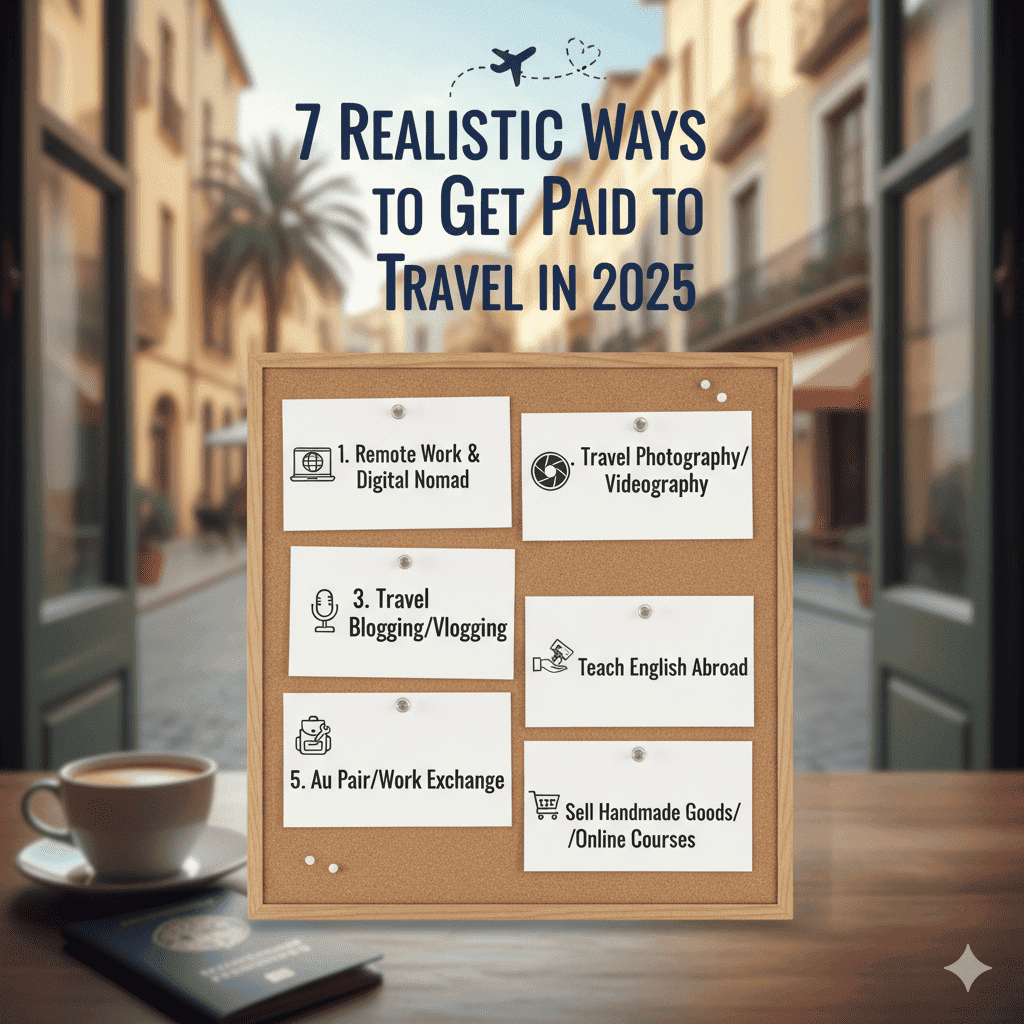
The dream of exploring the world while earning money isn’t just a fantasy anymore. In 2025, countless individuals have discovered legitimate ways to Get Paid to Travel, transforming their passion for adventure into sustainable income streams. Whether you’re looking to supplement your vacation budget or build a full-time career around travel, opportunities to Get Paid to Travel are more accessible than ever before.
This comprehensive guide reveals seven proven, realistic methods to Get Paid to Travel in 2025. Unlike unrealistic schemes or get-rich-quick promises, these strategies are being successfully implemented by real travelers worldwide. Each approach requires different skills, time investments, and dedication levels, ensuring there’s a path suitable for your unique situation and goals.
Let’s explore how you can join the growing community of people who’ve successfully learned to Get Paid to Travel while living their dream lifestyle.
1. Travel Content Creation: Building Your Digital Travel Empire
Content creation remains one of the most popular and achievable ways to Get Paid to Travel in 2025. The digital landscape has matured, offering multiple monetization streams for creators who consistently produce valuable, engaging travel content.
Understanding the Content Creation Landscape
The content creation space has evolved significantly. Success no longer requires millions of followers—micro-influencers and niche creators often earn substantial income with engaged audiences of 10,000 to 100,000 followers. Brands increasingly value authenticity and engagement over massive reach, creating opportunities for creators at all levels.
To Get Paid to Travel through content creation, you’ll need to choose your primary platform strategically. Instagram remains powerful for visual storytelling, YouTube offers the highest earning potential for long-form content, TikTok provides rapid growth opportunities for creative short-form videos, and blogs continue generating passive income through SEO traffic.
Multiple Revenue Streams for Travel Creators
Successful travel content creators don’t rely on a single income source. They build diversified revenue streams that work together synergistically:
Sponsored content and brand partnerships represent the most lucrative opportunity. Travel brands, tourism boards, hotels, airlines, and travel gear companies pay creators to feature their products or destinations. Rates vary dramatically based on audience size, engagement, and niche specialization. Micro-influencers might earn $100-$500 per post, while established creators command $5,000-$20,000 or more for comprehensive campaigns.
Affiliate marketing provides passive income by recommending products and services you genuinely use. When followers purchase through your unique links, you earn commissions. Travel booking platforms, accommodation sites, travel insurance providers, and gear manufacturers offer generous affiliate programs. Top performers earn $2,000-$10,000 monthly through strategic affiliate promotion.
Ad revenue from platforms like YouTube and blog display advertising creates passive income. Once you meet platform requirements (1,000 subscribers and 4,000 watch hours for YouTube), your content generates money while you sleep. Successful travel YouTubers earn $2,000-$15,000 monthly from ads alone, depending on viewership and niche.
Digital products and courses allow you to monetize your expertise. Create photography presets, travel planning templates, destination guides, or comprehensive courses teaching others how to travel better or build similar careers. This scalable income source can generate $1,000-$50,000+ monthly once established.
Building Your Content Creation Business
To successfully Get Paid to Travel as a content creator, treat it as a legitimate business from day one. Define your niche specifically—instead of being a “travel creator,” become “the budget Southeast Asia expert” or “luxury family travel specialist” or “adventure travel photographer.” Specificity attracts engaged audiences and premium brand partnerships.
Invest in quality equipment appropriate to your budget. You don’t need $10,000 in gear initially, but reliable basics matter. A good smartphone, stabilizer, microphone, and editing software provide everything needed to create professional content.
Consistency matters more than perfection. Establish a realistic posting schedule and maintain it religiously. Algorithms favor consistency, and audiences expect regular content from creators they follow.
Engage authentically with your community. Respond to comments, ask questions, and create content addressing audience needs. Engagement rates significantly impact brand partnership opportunities and platform algorithmic promotion.
Realistic Timeline and Expectations
Understanding the realistic timeline to Get Paid to Travel through content creation prevents frustration and premature quitting. Most successful creators spend 6-12 months building foundation and audience before earning significant income. The first year focuses on learning, creating, and growing, while meaningful income typically begins in year two.
However, strategic creators occasionally accelerate this timeline by identifying underserved niches, consistently producing exceptional content, or leveraging existing skills and networks. The key is treating this as a marathon, not a sprint.
2. Remote Work and Digital Nomad Lifestyle: Location Independence
Perhaps the most straightforward way to Get Paid to Travel involves bringing your existing career on the road. The remote work revolution has created unprecedented opportunities for location-independent professionals.
High-Demand Remote Careers for Travelers
Certain careers naturally facilitate the ability to Get Paid to Travel while maintaining stable income and career growth:
Software development and programming tops the list for remote work opportunities. Developers command high salaries ($70,000-$150,000+ annually) while working from anywhere with reliable internet. Companies worldwide desperately need skilled developers, making this career exceptionally portable.
Digital marketing specialists manage campaigns, content, SEO, and social media from anywhere. Marketing agencies and companies increasingly hire remote marketing professionals, offering salaries of $50,000-$100,000 with location flexibility.
Graphic designers and UX/UI designers create visual content and user experiences remotely. Freelance designers earn $50-$150 per hour, while full-time remote design positions offer $60,000-$120,000 annually.
Virtual assistants and project managers coordinate teams, manage projects, and handle administrative tasks remotely. Executive virtual assistants earn $40,000-$75,000 annually, while experienced project managers command $70,000-$110,000.
Writers, editors, and content strategists create and manage written content from anywhere. Freelance rates range from $50-$200 per hour, while full-time remote writing positions offer $50,000-$90,000 annually.
Online teachers and tutors teach English, academic subjects, or specialized skills through platforms like VIPKid, Cambly, or independently. English teachers earn $15-$25 per hour, while specialized subject tutors command $40-$100 hourly.
Customer service representatives provide remote support for companies worldwide. While typically lower-paying ($30,000-$50,000 annually), these positions often offer flexible schedules ideal for travel.
Transitioning to Remote Work
If your current career isn’t naturally remote, strategic approaches can create location independence. Start by discussing remote work arrangements with your current employer. The pandemic normalized remote work, making managers more receptive to flexible arrangements. Propose a trial period demonstrating productivity while working remotely.
Alternatively, acquire skills that facilitate remote work. Online courses, bootcamps, and certifications can transition you into remote-friendly careers within 3-12 months. Platforms like Coursera, Udemy, and specialized bootcamps offer pathways into coding, design, marketing, and other remote careers.
Freelancing provides another entry point. Build a client base while maintaining your current job, then transition to full-time freelancing once income stabilizes. Platforms like Upwork, Fiverr, and Toptal connect freelancers with clients globally.
Digital Nomad Lifestyle Considerations
Successfully leveraging remote work to Get Paid to Travel requires addressing practical considerations beyond just having a portable career.
Internet connectivity is non-negotiable. Research destinations thoroughly, choosing locations with reliable high-speed internet. Co-working spaces, cafes with good WiFi, and accommodations advertising strong internet become essential resources.
Time zone management impacts client communication and meeting schedules. Choose destinations strategically based on client locations, or adjust your schedule to accommodate necessary overlap hours.
Travel pace and productivity must balance. The most successful digital nomads avoid the mistake of constant movement. Staying 2-4 weeks per location allows productive work while still exploring new places.
Legal and tax considerations grow complex when working across international borders. Consult with tax professionals familiar with digital nomad taxation, understand visa requirements, and ensure you’re compliant with both home country and host country regulations.
3. Travel Photography and Videography: Visual Storytelling for Profit
Professional travel photography and videography represent exciting ways to Get Paid to Travel while pursuing artistic passion. The visual content market has expanded dramatically, creating opportunities for talented creators.
Building a Professional Travel Photography Business
To Get Paid to Travel as a photographer, develop a distinctive visual style that makes your work instantly recognizable. Study successful travel photographers, identify gaps in the market, and craft an approach that combines technical excellence with unique artistic vision.
Build a professional portfolio showcasing your best work across different categories—landscapes, cultural moments, adventure, accommodations, food, and architecture. Quality matters far more than quantity. Thirty exceptional images outperform 300 mediocre ones.
Invest strategically in equipment. Professional cameras, lenses, drones, and editing software represent significant investments, but you needn’t purchase everything immediately. Start with quality basics and expand as income grows. Many successful photographers begin with a single camera body and versatile lens, adding specialized equipment as specific needs arise.
Monetizing Travel Photography
Multiple revenue streams allow photographers to Get Paid to Travel sustainably:
Stock photography provides passive income. Upload images to platforms like Shutterstock, Adobe Stock, Getty Images, and Alamy. Individual sales generate $0.25-$100 per image, but volume creates meaningful income. Successful stock photographers earn $500-$5,000 monthly from extensive portfolios.
Client commissions offer the highest per-project income. Tourism boards, hotels, resorts, tour operators, and travel companies hire photographers for specific assignments. Rates vary dramatically: $500-$2,000 for smaller properties or destinations, $5,000-$20,000+ for major campaigns.
Print sales through personal websites or platforms like Fine Art America allow selling physical prints and digital downloads directly to consumers. Margins are excellent, with photographers keeping 60-80% of sales prices.
Photography workshops and tours combine teaching with travel. Lead groups to photogenic destinations, teaching photography while everyone explores together. Workshops range from weekend events ($500-$1,500 per participant) to multi-week adventures ($3,000-$8,000 per person). With 6-12 participants, workshops generate substantial revenue while covering your travel costs.
Editorial and magazine work pays photographers for images accompanying articles. Rates vary ($100-$1,000+ per image), but editorial work builds credentials and opens doors to higher-paying opportunities.
Video Content Creation for Travel
Travel videography has exploded in demand. Businesses need promotional videos, documentaries, social media content, and virtual tours. Videographers who can Get Paid to Travel while filming command premium rates:
Destination marketing organizations pay $5,000-$30,000 for comprehensive video content. Hotels and resorts commission property showcase videos for $2,000-$10,000. Tour operators need promotional content valued at $1,500-$8,000 per video. Even smaller businesses seek video content, paying $500-$2,500 for professional work.
Aerial drone footage commands premium rates due to specialized skills and equipment requirements. FAA certification (for US-based work) and quality drone equipment investment open lucrative opportunities, with drone footage alone commanding $1,000-$5,000 for comprehensive packages.
4. Travel Writing and Journalism: Stories That Pay
Travel writing offers intellectually stimulating opportunities to Get Paid to Travel while sharing stories and insights from around the world. Though competitive, talented writers consistently secure paid assignments and build sustainable careers.
Types of Travel Writing Opportunities
Magazine and publication articles remain traditional but viable. Major travel magazines like Travel + Leisure, Condé Nast Traveler, and National Geographic Traveler pay $500-$2,000 per article. Regional publications and online magazines offer $100-$800 per piece. Building relationships with editors and understanding publication styles increases acceptance rates.
Guidebook contributions for publishers like Lonely Planet, Fodor’s, and Rick Steves pay researchers and writers to update destination content. Compensation varies ($20-$100 per day plus expenses), but the work provides steady income and comprehensive destination coverage.
Sponsored travel writing for tourism boards and travel brands combines journalism with marketing. Destinations and companies commission articles for their websites, paying $300-$2,000 per piece. This work requires maintaining journalistic integrity while meeting client marketing objectives.
Copywriting for travel companies involves creating website content, marketing materials, brochures, and advertising copy. Travel copywriters earn $50-$150 per hour or $500-$3,000 per project, depending on scope and client budget.
Travel blogging with monetization allows writers to Get Paid to Travel through owned platforms. Successful blogs generate income through advertising, affiliate marketing, sponsored content, and digital products. Monetized travel blogs earn $500-$10,000+ monthly once established.
Building a Travel Writing Career
Success in travel writing requires exceptional writing skills, unique perspectives, and professional networking. Develop your voice through regular writing practice, studying successful travel writers, and seeking feedback from peers and mentors.
Start by pitching smaller publications to build clips and credentials. Even unpaid or low-paying initial work creates the portfolio needed for bigger opportunities. Every published piece, regardless of payment, demonstrates credibility to future editors.
Specialize strategically. Instead of being a generic travel writer, become the expert on specific regions, travel styles, or topics. Specialization makes you the obvious choice when editors need content in your niche area.
Network relentlessly. Attend travel writer conferences, join professional organizations like the Society of American Travel Writers (SATW), engage with editors on social media, and build relationships within the industry. Many assignments come through personal connections rather than cold pitching.
Pitching and Landing Assignments
Successful pitches to Get Paid to Travel through writing assignments follow proven formulas. Research publications thoroughly, understanding their style, audience, and typical content. Tailor each pitch specifically to the publication, demonstrating familiarity with their work.
Compelling pitches include attention-grabbing headlines, clear article angles, explanation of why this story matters now, demonstration of your qualification to write it, and specific details about what the article will include. Never send generic pitches to multiple publications simultaneously.
Follow up professionally if you don’t receive responses within publications’ stated timeframes. Persistence matters, but respect editors’ time and inboxes.
5. Teaching English Abroad and Online: Education Meets Adventure
Teaching English represents one of the most accessible ways to Get Paid to Travel, requiring minimal prerequisites beyond native-level English proficiency and a bachelor’s degree (for many positions).
Traditional Teaching Positions Abroad
International schools and language institutes worldwide hire English teachers, providing salaries, housing, and often flights. Popular destinations include South Korea, Japan, China, Taiwan, Vietnam, Thailand, Spain, and United Arab Emirates.
South Korea offers excellent packages through programs like EPIK (English Program in Korea), providing $1,800-$2,500 monthly salary, free furnished housing, flight reimbursement, and completion bonus. Teachers save $500-$1,500 monthly while enjoying comprehensive cultural immersion.
Japan through programs like JET (Japan Exchange and Teaching) pays ¥3.36 million annually (approximately $2,800 monthly), with opportunities to explore Japanese culture deeply. While housing isn’t always provided, salaries support comfortable living with savings potential.
China offers variable but often lucrative packages, especially in major cities. Teachers earn $1,500-$3,500 monthly with housing provided or subsidized. Major cities like Beijing and Shanghai offer higher salaries but increased living costs.
Middle Eastern countries provide the highest salaries, with UAE positions paying $3,000-$5,500 monthly tax-free, plus housing, flights, and health insurance. These positions allow substantial savings while exploring a fascinating region.
Online Teaching Opportunities
Online English teaching allows you to Get Paid to Travel with ultimate flexibility, teaching from anywhere with reliable internet:
VIPKid, Magic Ears, and Qkids connect teachers with Chinese students for one-on-one or small group classes. Base pay ranges $14-$22 per hour, with incentives pushing hourly rates to $20-$28. Scheduling flexibility allows teaching from different time zones.
Cambly and Cambly Kids offer ultra-flexible opportunities, paying $10.20 per hour to conversation with students worldwide. No lesson planning required, making this ideal for traveling teachers seeking simple, consistent income.
iTalki and Verbling allow independent teachers to set rates ($15-$50+ per hour) and schedules, keeping 85-100% of earnings. Building a student base requires marketing effort, but successful teachers earn $2,000-$6,000 monthly with complete scheduling control.
Specialized subject tutoring commands premium rates. If you possess expertise beyond English—mathematics, sciences, test preparation—you can charge $40-$100+ hourly teaching online.
Getting Certified and Starting
To Get Paid to Travel through teaching, most positions require TEFL, TESOL, or CELTA certification. Online TEFL courses cost $200-$400 and require 120+ hours, providing necessary credentials for most teaching positions. In-person intensive courses like CELTA cost $1,500-$2,500 but carry more prestige for competitive positions.
Research thoroughly before committing to positions abroad. Understand contract terms, living conditions, support provided, and cultural expectations. Join online communities where current and former teachers share experiences and advice.
6. Yacht Crew and Cruise Ship Jobs: Maritime Travel Careers
Working on yachts or cruise ships offers unique opportunities to Get Paid to Travel while minimizing personal expenses, as room and board are typically included.
Yacht Crew Positions
Private and charter yachts employ crews ranging from two people on smaller vessels to 30+ on superyachts. Positions include deckhands, stewards/stewardesses, chefs, engineers, and captains, each requiring different skills and certifications.
Entry-level deckhand positions pay $2,500-$3,500 monthly on charter yachts, with all living expenses covered. Work involves maintenance, operation, and guest service, with opportunities to visit exclusive destinations and receive generous tips from charter guests.
Steward/stewardess positions handle interior cleaning, service, and guest care, earning $2,500-$4,000 monthly plus tips. Hospitality experience helps secure these positions, which offer exposure to luxury service standards and networking opportunities.
Yacht chefs command $4,000-$8,000+ monthly depending on yacht size and experience, preparing restaurant-quality meals in compact galley kitchens while traveling to spectacular locations.
Experienced crew members on superyachts earn substantially more—$5,000-$12,000+ monthly—while enjoying generous vacation time, full expense coverage, and opportunities to save nearly all earnings.
Cruise Ship Careers
Cruise lines employ thousands across hundreds of positions, from entertainment and hospitality to technical and medical roles. Contracts typically span 4-10 months, providing intensive work periods followed by extended time off.
Entertainment staff, including performers, musicians, DJs, and activity coordinators, earn $1,800-$4,000 monthly while traveling to diverse ports worldwide. Positions suit outgoing personalities comfortable with public performance and guest interaction.
Hospitality positions (servers, bartenders, housekeeping, front desk) offer opportunities to Get Paid to Travel with earnings of $1,500-$3,000 monthly plus tips. While work is demanding, experiencing multiple countries without personal accommodation costs appeals to many.
Specialized positions like fitness instructors, photographers, spa therapists, and shop staff combine professional skills with travel, earning $2,000-$4,500 monthly depending on role and cruise line.
Getting Started in Maritime Work
Entry into yacht or cruise work requires certifications and persistence. Basic STCW (Standards of Training, Certification and Watchkeeping) certification is mandatory for most maritime positions, costing $800-$1,500 and requiring approximately one week to complete.
Location matters for breaking into the yacht industry. Fort Lauderdale, Antibes, and Palma de Mallorca serve as major yachting hubs where crews connect with opportunities. Many aspiring crew members relocate to these areas, working temporary positions while networking and seeking permanent yacht placements.
For cruise ships, apply directly through cruise line websites. Larger companies like Carnival, Royal Caribbean, Norwegian, and Disney Cruise Line hire continuously for various positions. Application processes can take several months, requiring persistence and patience.
7. Travel Consulting and Trip Planning: Expertise as Income
Travel expertise can be monetized through consulting and planning services, allowing you to Get Paid to Travel while helping others plan their adventures.
Travel Agent and Advisor Careers
Despite online booking tools, professional travel advisors remain in demand, especially for complex itineraries, luxury travel, and specialized trips. Modern travel advisors work remotely, earning commissions on bookings while experiencing destinations firsthand to better serve clients.
Host agency affiliations provide booking platforms, supplier relationships, and commission structures for independent advisors. Advisors keep 60-80% of commissions, earning $30,000-$100,000+ annually depending on client base and specialization.
Luxury travel specialization commands the highest commissions. Luxury clients value expertise and personalized service, with advisors earning 10-20% commissions on high-value bookings. A single luxury honeymoon or family vacation can generate $2,000-$10,000 in commission.
Niche specialization in areas like adventure travel, destination weddings, cruise vacations, or specific regions creates expert positioning that attracts premium clients willing to pay for specialized knowledge.
Independent Travel Consulting
Beyond traditional travel agency work, consultants Get Paid to Travel by offering specialized planning services:
Itinerary planning services charge flat fees ($100-$1,000+) for detailed custom itineraries without booking services. Clients who prefer self-booking but want expert planning appreciate this service, providing consultants with straightforward income without commission dependencies.
Relocation consulting helps individuals and families moving internationally, charging $500-$5,000 for comprehensive services including neighborhood research, school information, housing assistance, and cultural preparation.
Corporate travel consulting advises businesses on travel program optimization, policy development, and expense management, commanding day rates of $500-$2,000.
Destination expertise consulting for travel companies, tourism boards, and media provides income while establishing your authority. Rates range from $100-$300 per hour for consulting services.
Building Your Consulting Business
Success requires deep destination knowledge, industry connections, and marketing savvy. Begin by thoroughly researching and personally experiencing destinations you’ll recommend. Nothing substitutes for firsthand knowledge when advising clients.
Obtain appropriate credentials. While not always required, certifications from The Travel Institute, ASTA (American Society of Travel Advisors), or specialized training programs enhance credibility and client confidence.
Build your brand through content marketing. Share destination expertise through blogs, social media, videos, and guides, establishing yourself as the go-to expert for your specialization. Consistent content creation attracts clients seeking your specific expertise.
Network within the industry. Attend travel trade shows, join professional organizations, and build relationships with suppliers. Industry connections provide better rates, exclusive experiences, and insider knowledge that benefits clients.
Conclusion: Your Path to Get Paid to Travel Starts Now
The dream to Get Paid to Travel is entirely achievable in 2025 through these seven realistic approaches. Whether you’re drawn to creative content creation, prefer stable remote employment, possess teaching skills, seek maritime adventures, or want to monetize travel expertise, legitimate pathways exist to transform wanderlust into income.
Success in any approach to Get Paid to Travel requires realistic expectations, dedicated effort, and willingness to treat travel work as serious business rather than perpetual vacation. The most successful travel workers balance exploration with professional responsibilities, finding sustainable rhythms that support both income generation and meaningful travel experiences.
Choose the approach aligning with your skills, interests, and lifestyle preferences. Many successful individuals combine multiple methods—perhaps teaching English online while building a travel blog, or working remotely while creating photography portfolios. Diversification provides income security while maximizing opportunities to Get Paid to Travel.
Start today by taking concrete action toward your chosen path. The journey to Get Paid to Travel begins with a single step, whether that’s researching TEFL certification, creating your first piece of travel content, updating your resume for remote positions, or researching yacht crew requirements. Each small action moves you closer to the travel lifestyle you envision.
Also read this:
Perplexity Upgrades Comet for True Multitasking Across Tabs: The Revolutionary 2025 Update
AI-Enhanced Travel Photography: Capture the World Like Never Before
6 Game-Changing AI Trends 2025 — How They’ll Revolutionize Work, Life & Business