
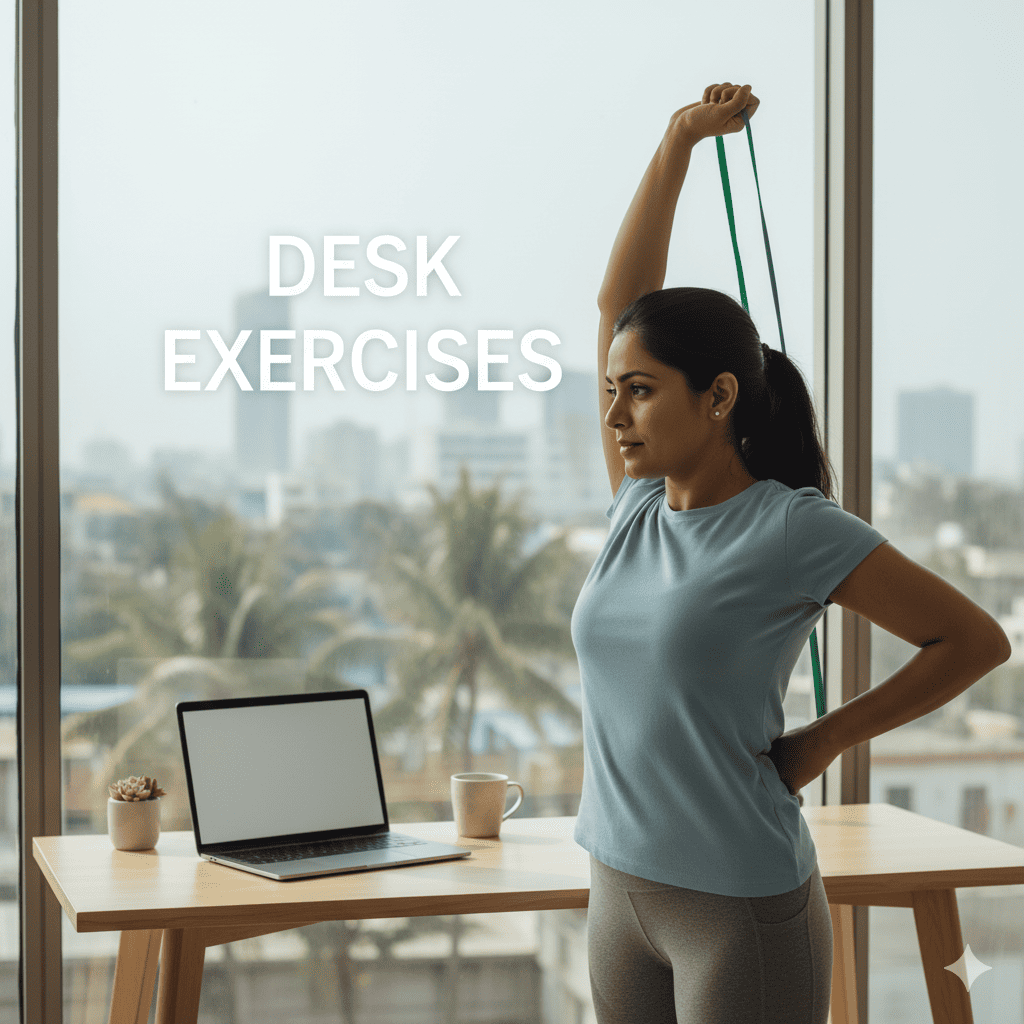
The work-from-home revolution has transformed how millions of professionals approach their careers, offering unprecedented flexibility and comfort. However, this shift has also created a silent health crisis: prolonged sitting, poor posture, and sedentary behavior that can lead to chronic pain, reduced productivity, and long-term health complications. The solution isn’t abandoning your home office – it’s integrating smart desk exercises into your daily routine that keep your body active, your mind sharp, and your energy levels high throughout the workday.
Whether you’re dealing with tight shoulders from hunching over your laptop, lower back pain from inadequate seating, or the afternoon energy crash that derails your productivity, the right desk exercises can transform your work-from-home experience from physically draining to genuinely energizing.
Why Work-From-Home Professionals Need Desk Exercises
The human body wasn’t designed for the modern work-from-home lifestyle. Our ancestors moved constantly throughout their days, but today’s remote workers often spend 8-12 hours in the same position, creating a cascade of physical and mental health challenges that desk exercises are uniquely positioned to address.
The Hidden Costs of Prolonged Sitting
Musculoskeletal Impact: Extended sitting tightens hip flexors, weakens glutes, and places excessive pressure on the lumbar spine. This combination creates the perfect storm for lower back pain, which affects over 80% of remote workers according to recent ergonomic studies.
Cardiovascular Consequences: Sitting for more than 6 hours daily increases cardiovascular disease risk by 64%, while also slowing metabolism and reducing the body’s ability to regulate blood sugar effectively.
Mental Health Effects: Sedentary behavior directly correlates with increased anxiety, depression, and cognitive decline. The lack of movement reduces blood flow to the brain, impacting focus, creativity, and decision-making abilities.
Productivity Paradox: While we think constant sitting helps us work more, research shows that employees who incorporate regular movement breaks are 23% more productive and report significantly higher job satisfaction.
How Desk Exercises Transform Your Workday
Immediate Energy Boost: Even 30 seconds of movement increases circulation, delivering oxygen-rich blood to your brain and muscles, creating an instant energy lift that rivals caffeine without the crash.
Pain Prevention: Regular desk exercises maintain joint mobility, muscle activation, and proper alignment, preventing the chronic pain patterns that plague remote workers.
Enhanced Focus: Movement breaks reset your attention span, helping you return to tasks with renewed concentration and creative problem-solving abilities.
Stress Management: Physical activity triggers endorphin release while reducing cortisol levels, helping you manage work stress more effectively and maintain emotional balance throughout challenging days.
Essential Upper Body Desk Exercises
Neck and Shoulder Relief Sequences
Neck Rolls and Stretches Start your desk exercises routine by addressing the most common problem area for remote workers: neck tension and forward head posture.
Basic Neck Roll: Sit tall in your chair, slowly drop your right ear toward your right shoulder, hold for 10 seconds, then roll your chin toward your chest and over to the left shoulder. Reverse direction after 5 complete rolls.
Upper Trap Stretch: Place your right hand behind your back, tilt your head to the left, and gently pull with your left hand for a deep stretch along the right side of your neck. Hold for 20 seconds each side.
Chin Tucks: Create a double chin by pulling your head straight back, countering forward head posture. Hold for 5 seconds, repeat 10 times throughout the day.
Shoulder Blade Activation These movements counteract the rounded shoulder posture that develops from keyboard and mouse work.
Shoulder Blade Squeezes: Imagine trying to crack a walnut between your shoulder blades. Hold the squeeze for 10 seconds, focusing on pulling your shoulders down and back. Perform 10 repetitions every hour.
Wall Angels: Stand with your back against a wall, arms in a goal-post position. Slide your arms up and down the wall while maintaining contact with your back, wrists, and elbows. Complete 15 slow repetitions.
Doorway Chest Stretch: Place your forearms on either side of a doorway, step forward to feel a deep stretch across your chest and front of shoulders. Hold for 30 seconds, repeat 3 times.
Wrist and Forearm Maintenance
Carpal Tunnel Prevention Series Protect your wrists and forearms from repetitive strain injuries with these targeted movements.
Wrist Circles: Extend your arms forward, make fists, and slowly rotate your wrists in large circles. Complete 10 circles in each direction, focusing on the full range of motion.
Prayer Stretch: Place palms together in front of your chest, slowly lower your hands while keeping palms connected until you feel a stretch in your forearms. Hold for 15 seconds.
Tendon Glides: Start with fingers extended, slowly make a fist, then create a hook shape, and finally a straight fist. This sequence helps maintain tendon mobility and prevents adhesions.
Core and Lower Body Desk Exercises
Seated Core Activation
Your core muscles essentially shut off during prolonged sitting, but these desk exercises can reactivate them without leaving your workspace.
Seated Marches While maintaining good posture, lift your right knee toward your chest, engaging your core to control the movement. Lower slowly and repeat with the left leg. Perform 20 alternating marches, focusing on keeping your spine neutral.
Seated Russian Twists Lean back slightly in your chair, lift your feet off the ground, and rotate your torso from side to side. For added challenge, hold a water bottle or book. Complete 20 twists while maintaining lifted legs.
Abdominal Breathing Place one hand on your chest, one on your stomach. Breathe deeply so that only your stomach hand moves, engaging your deep core muscles while promoting relaxation. Practice for 2 minutes during stressful moments.
Hip Flexor and Glute Activation
Standing Hip Flexor Stretch Step your right foot back into a lunge position next to your chair, drop your hips forward to stretch the front of your right hip. This counters the shortened position from sitting. Hold for 30 seconds each leg.
Glute Squeezes While seated, clench your glute muscles as tightly as possible, hold for 10 seconds, then release. This simple exercise reactivates muscles that become inhibited during prolonged sitting. Repeat 15 times.
Figure-Four Hip Stretch Sit tall, place your right ankle on your left knee, and gently lean forward to stretch your right hip. This addresses the external rotation and flexibility lost during sitting. Hold for 20 seconds each side.
Energizing Movement Breaks
5-Minute Energy Reset Routine
When you feel your energy flagging, this quick sequence can reset your entire system without requiring a full workout break.
Minute 1: Wake Up Your Spine
- Seated spinal twists (10 each direction)
- Cat-cow stretches in your chair (10 repetitions)
- Shoulder rolls (10 backward, 10 forward)
Minute 2: Activate Your Legs
- Seated leg extensions (10 each leg)
- Ankle pumps and circles (10 each direction)
- Calf raises while standing (15 repetitions)
Minute 3: Get Your Blood Flowing
- Arm circles (10 small, 10 large each direction)
- Torso twists with arms extended (10 each side)
- Standing march in place (30 seconds)
Minute 4: Open Your Body
- Standing forward fold (hold for 15 seconds)
- Standing side bends (5 each direction)
- Hip circles (5 each direction)
Minute 5: Mental Reset
- Deep breathing with arm raises (5 breaths)
- Gentle neck stretches (hold each direction for 10 seconds)
- Set intention for the next work block
Power-Up Exercises for Afternoon Slumps
Desk Push-Ups Place your hands on your desk edge, walk your feet back, and perform push-ups at an incline. This engages your entire upper body while providing an energy boost. Start with 10 repetitions, building to 20.
Chair Squats Stand up from your chair and sit back down without using your hands. Focus on controlled movement and full range of motion. Perform 15 repetitions to activate your largest muscle groups.
Standing Desk Jacks If you have privacy, perform jumping jacks or modified arm jacks while standing. This full-body movement rapidly increases heart rate and energy levels. Complete 30 seconds of movement.
Posture Correction Through Movement
Addressing Forward Head Posture
Wall Slides Stand with your back against a wall, slide up and down while maintaining contact with your head, upper back, and glutes. This reinforces proper spinal alignment and shoulder positioning.
Prone Y-T-W Series Lie face down on your bed during breaks, perform arm movements in Y, T, and W shapes to strengthen your posterior chain and improve posture. Hold each position for 5 seconds, repeat 10 times.
Countering Rounded Shoulders
Doorway Stretch Series Use doorways throughout your home for different stretching angles: high, middle, and low arm positions to address various aspects of shoulder tightness from keyboard work.
Resistance Band Exercises Keep a light resistance band at your desk for:
- External rotations to strengthen rear deltoids
- Face pulls to activate middle traps
- Overhead stretches to improve shoulder mobility
Creating Your Personalized Desk Exercise Schedule
The Micro-Break System (Every 30 Minutes)
30-Second Movement Snacks
- Neck rolls and shoulder shrugs
- Ankle pumps and calf raises
- Deep breathing with arm raises
- Quick spinal twists
The Power Break System (Every 2 Hours)
5-Minute Movement Breaks
- Complete the energy reset routine
- Walk around your space
- Perform 2-3 targeted stretches based on your current tension areas
- Do 10-15 bodyweight exercises (squats, push-ups, lunges)
The Focused Session System (2-3 Times Daily)
15-Minute Dedicated Movement
- Morning: Full-body activation routine before work
- Midday: Comprehensive posture correction sequence
- Evening: Relaxation and tension release routine
Technology Integration for Consistent Practice
Apps and Tools for Desk Exercise Reminders
Smartphone Apps
- Stretchly: Automated break reminders with exercise suggestions
- Workrave: Computer-based break enforcement with stretching routines
- Seven: Quick 7-minute workout options perfect for work breaks
Wearable Technology
- Smartwatch movement reminders every 50 minutes
- Activity trackers that prompt standing and movement
- Heart rate monitors to gauge intensity during desk exercise sessions
Browser Extensions
- Break timers that lock your screen until you take movement breaks
- Posture reminder tools with webcam monitoring
- Exercise demonstration pop-ups with random movement suggestions
Creating Environmental Cues
Visual Reminders
- Sticky notes on your monitor with exercise reminders
- Exercise charts posted where you’ll see them regularly
- Water bottle placement that requires standing to reach
Equipment Integration
- Resistance bands draped over your chair
- Foam roller positioned visibly near your workspace
- Balance pad under your desk for standing work sessions
Advanced Desk Exercise Strategies
Progressive Overload for Desk Warriors
As your body adapts to basic desk exercises, progression becomes essential for continued benefits.
Week 1-2: Foundation Building
- Master basic movements with proper form
- Establish consistent break timing
- Focus on awareness of posture and tension patterns
Week 3-4: Intensity Increase
- Add resistance bands to upper body exercises
- Increase repetitions by 25%
- Introduce balance challenges (single-leg stands during calls)
Week 5-8: Advanced Integration
- Combine movements into flowing sequences
- Add isometric holds to strengthen endurance
- Incorporate plyometric movements for power development
Ergonomic Exercise Equipment
Under-Desk Solutions
- Pedal exercisers for continuous leg movement
- Balance boards for active standing
- Foot rockers to improve ankle mobility and circulation
Desk-Adjacent Tools
- Adjustable standing desk converters
- Exercise balls as alternative seating
- Suspension trainers mounted to doorways for strength work
Troubleshooting Common Challenges
“I Don’t Have Time” Solutions
Meeting Multitasking
- Ankle exercises during video calls with camera off
- Standing and gentle stretching during phone meetings
- Isometric exercises that don’t create visible movement
Productivity Integration
- Think breaks during natural transition periods
- Exercise during loading times or software updates
- Movement as reward for completing tasks or email batches
“I Feel Self-Conscious” Strategies
Discrete Movement Options
- Seated exercises that aren’t visible to others
- Bathroom break stretching routines
- Isometric exercises that appear like fidgeting
Building Confidence
- Start with private spaces and gradually expand comfort zone
- Focus on how good movement feels rather than appearance
- Remember that health is a professional asset, not a distraction
“I Forget to Move” Systems
Environmental Design
- Set hourly alarms with specific exercise instructions
- Use apps that block computer access until movement breaks
- Partner with colleagues or family for accountability
Habit Stacking
- Link exercises to existing habits (coffee breaks, bathroom visits)
- Use transition periods between tasks as movement cues
- Create “exercise menus” for different types of work breaks
Measuring Your Progress and Results
Physical Improvements to Track
Posture Photography
- Take monthly photos from the side to document spinal alignment
- Notice changes in shoulder height and head position
- Track improvements in natural standing posture
Flexibility Assessments
- Measure forward reach while seated (spinal flexibility)
- Test shoulder mobility with behind-the-back reach
- Document hip flexor tightness with standing hip flexor test
Energy and Productivity Metrics
- Rate energy levels hourly on a 1-10 scale
- Track afternoon productivity compared to morning performance
- Monitor sleep quality as movement affects rest
Long-Term Health Benefits
Cardiovascular Improvements
- Resting heart rate typically decreases with regular movement
- Blood pressure may improve with consistent activity breaks
- Overall cardiovascular fitness increases despite desk-based work
Musculoskeletal Health
- Reduced frequency and intensity of back pain
- Improved joint mobility and muscle flexibility
- Decreased tension headaches and neck pain
Mental Health Benefits
- Enhanced mood stability throughout the day
- Improved stress management and resilience
- Better focus and cognitive performance during complex tasks
Building a Sustainable Movement Culture
Creating lasting change requires more than individual discipline – it demands a systematic approach that makes movement the easy choice rather than the difficult one.
Family and Household Integration
Shared Movement Breaks
- Include family members in stretching sessions
- Create active transitions between work and family time
- Use children’s play time as opportunities for your own movement
Home Environment Optimization
- Designate movement spaces that don’t require setup
- Keep exercise equipment visible and accessible
- Create walking routes through your living space
Professional Integration
Team Movement Initiatives
- Suggest walking meetings for appropriate discussions
- Share desk exercises resources with colleagues
- Create accountability partnerships with other remote workers
Client and Meeting Integration
- Stand during phone calls when appropriate
- Take notes while walking for creative problem-solving
- Use movement as a professional energy management strategy
Your Movement-Integrated Future
The future of work-from-home success isn’t about perfect ergonomic setups or expensive equipment – it’s about consistent, intelligent movement integration that supports your health, energy, and productivity. Desk exercises represent a fundamental shift from viewing work and health as competing priorities to understanding them as mutually supportive elements of a successful remote career.
Start with just one or two exercises that address your most pressing discomfort areas. Maybe it’s the neck rolls that relieve morning tension, or the hip flexor stretches that counteract afternoon tightness. Build from there, adding new movements as previous ones become habitual, creating a personalized movement practice that evolves with your needs and schedule.
Remember that the best desk exercises are the ones you actually do consistently, not the ones that sound most impressive or comprehensive. Your body will thank you for small, regular movements far more than sporadic intense sessions that disrupt your work flow.
The work-from-home revolution has given us unprecedented control over our work environments. Use that control to create a workspace that supports not just your professional goals, but your physical health, mental clarity, and long-term well-being. Your future self – both personally and professionally – will appreciate the investment you make in movement today.
Also read this:
Trending Hashtags for September 2025
Running Shoes :Best Fall 2025 Models for Every Runner
Brand Collaboration: 25+ Creative Partnership Ideas That Drive Real Results in 2025