
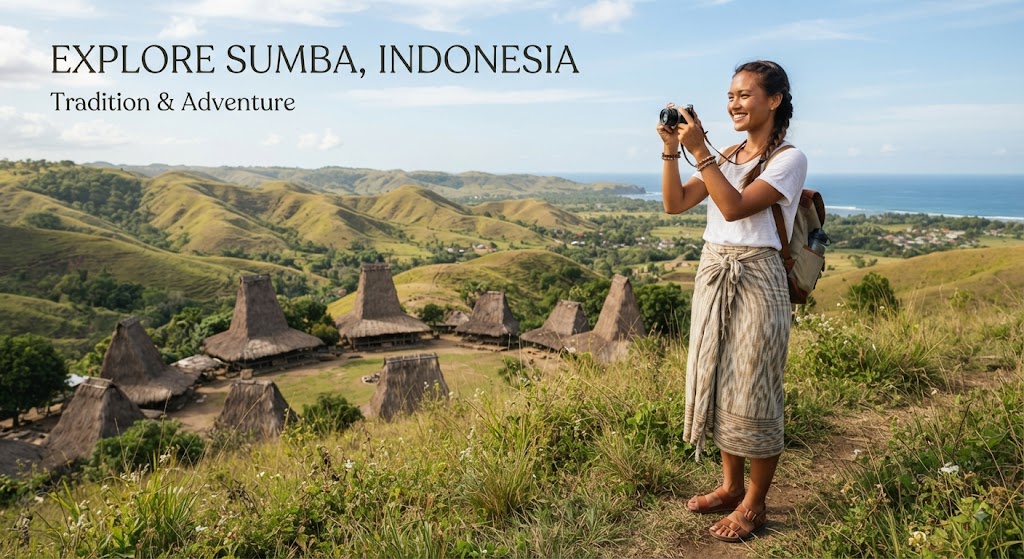
If you already know Indonesia for Bali, Lombok, and famous beaches, Sumba offers a completely different kind of island adventure. Here, dramatic savannas meet rugged coastlines, traditional villages preserve distinctive architecture, waterfalls hide among lush landscapes, and local weaving traditions remain an important part of everyday culture.
The challenge is knowing where to go, how to travel between regions, when to visit, and how much time you realistically need. This Sumba Indonesia travel guide covers the best places to visit, things to do, beaches, traditional villages, transportation, seasons, accommodation, costs, practical tips, and itinerary ideas so you can build a smoother trip from the beginning.
What Is Sumba Indonesia Travel?
Sumba Indonesia travel refers to exploring Sumba Island in East Nusa Tenggara, with an emphasis on its beaches, waterfalls, savannas, traditional villages, local culture, textiles, and natural landscapes.
Unlike destinations centered around one major tourist hub, Sumba is divided into four regencies, with attractions distributed across the island. As a result, road travel plays a major role in most itineraries.
One of Sumba’s biggest strengths is the way natural scenery and living cultural traditions exist side by side. Travelers can visit Ratenggaro Village, swim at Weekuri Lagoon, photograph Wairinding Hill, explore traditional villages, and discover Sumba’s distinctive ikat weaving traditions during the same trip.
Why Is Sumba Indonesia Worth Visiting?
Sumba is worth visiting because it combines dramatic landscapes, traditional culture, beaches, waterfalls, and a quieter island-travel experience.
The official Indonesian tourism board highlights Sumba for its villages, beaches, waterfalls, savannas, ikat weaving, and cultural traditions. This combination makes the island particularly appealing to travelers who want more than a conventional beach holiday.
For photographers, Sumba offers exceptional variety. A single trip can include golden savannas at Wairinding, dramatic coastal formations, traditional houses, waterfalls, and village scenes.
What Are the Best Places to Visit in Sumba?
The best places to visit in Sumba include Ratenggaro Village, Praijing Village, Weekuri Lagoon, Wairinding Hill, Waikabubak, Tambolaka, Waingapu, beaches, and waterfalls.
Because these attractions are spread across different parts of the island, choosing your region first can make your Sumba Indonesia travel itinerary much more realistic.
What Are the Best Places in West Sumba?
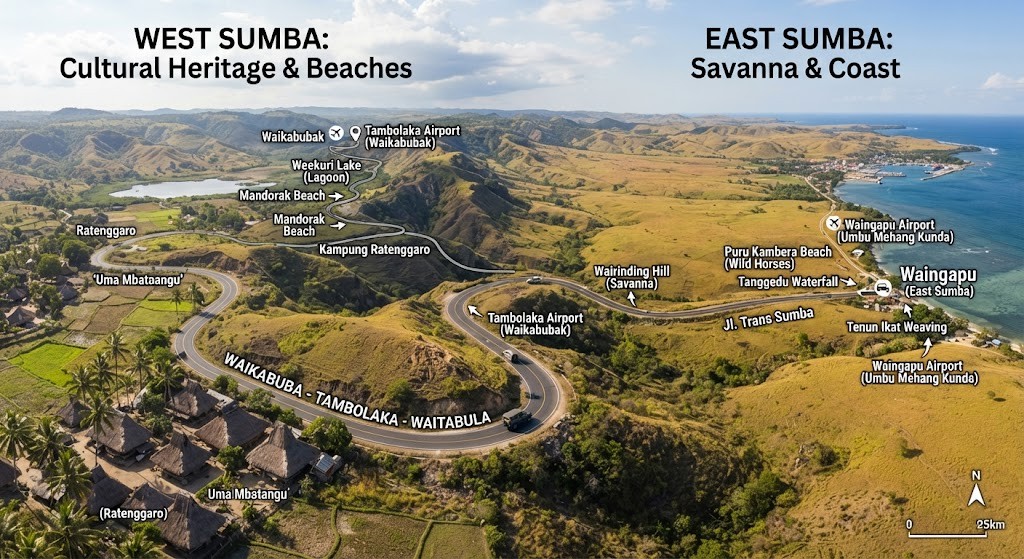
West Sumba is especially known for traditional villages, beaches, lagoons, waterfalls, and dramatic coastal scenery.
Ratenggaro Village is one of the region’s standout cultural destinations. Located near the coast, it is recognized for its distinctive tall-roofed traditional houses and megalithic tombs.
Weekuri Lagoon offers turquoise water surrounded by rock formations, making it a popular stop for swimming and scenery. Meanwhile, Bawana Beach is known for its dramatic cliffs and open coastal landscape.
Praijing Village near Waikabubak provides another opportunity to experience traditional architecture and local culture.
What Are the Best Places in East Sumba?
East Sumba is particularly known for savannas, viewpoints, waterfalls, weaving villages, and Waingapu.
Wairinding Hill is about 30 minutes from central Waingapu and offers a landscape that changes significantly with the seasons. During wetter periods, the hills can appear green, while the dry season creates the recognizable golden-brown scenery.
Waingapu also provides access to traditional weaving communities such as Prailiu, Kwangu, and Lambanapu. Traditional Sumba ikat is produced using established hand-weaving techniques and natural dyes in some communities.
Best Places to Visit in Sumba at a Glance
| Destination | Region | Best For |
|---|---|---|
| Ratenggaro Village | Southwest | Traditional houses and tombs |
| Weekuri Lagoon | Southwest | Swimming and scenery |
| Praijing Village | West | Culture and photography |
| Waikabubak | West | Villages and local culture |
| Bawana Beach | Southwest | Cliffs and coastal photography |
| Wairinding Hill | East | Savanna landscapes |
| Waingapu | East | Markets and ikat weaving |
| Tanggedu Waterfall | East | Nature and adventure |
What Are the Best Things to Do in Sumba Indonesia?
The best things to do in Sumba include exploring beaches, visiting traditional villages, swimming in lagoons, hiking viewpoints, discovering waterfalls, photographing landscapes, and learning about traditional textiles.
Visit Traditional Sumba Villages
Traditional villages should be treated as meaningful cultural experiences rather than quick photography stops.
Prailiu near Waingapu, for example, is close enough to the city for travelers to experience traditional houses and observe ikat weaving.
Explore Beaches and Lagoons
Sumba’s coast provides a mixture of broad sandy beaches, cliffs, unusual rock formations, and lagoons.
Weekuri Lagoon offers a different experience from an open beach, while Bawana Beach is particularly memorable for its coastal cliffs and landscape.
Discover Waterfalls
Sumba’s waterfalls add a strong nature and adventure element to an itinerary. Depending on the destination, reaching a waterfall may involve driving followed by walking or trekking.
For travelers interested in Indonesia waterfall destinations, Sumba can add a strong nature component to a wider Indonesian trip.
Photograph Sumba’s Landscapes
Photography is one of the strongest reasons to explore Sumba. The island combines savannas, traditional architecture, beaches, cliffs, lagoons, waterfalls, and cultural scenes.
Wairinding Hill is particularly notable for its changing seasonal appearance, while traditional villages and coastal areas provide completely different photographic subjects.
What Are the Most Beautiful Beaches in Sumba?
Sumba beaches are known for wide sandy shores, dramatic cliffs, unusual rock formations, and relatively undeveloped coastal scenery.
Bawana Beach is one of the most recognizable examples. Its pale sand and dramatic stone cliffs create a distinctive coastal landscape that makes it popular with photographers.
Weekuri Lagoon provides a different kind of water experience because it is a natural lagoon rather than a conventional open beach.
What Are the Best Traditional Villages to Visit in Sumba?
The best traditional villages to visit in Sumba include Ratenggaro, Praijing, and Prailiu, although each offers a different cultural experience.
These communities are important for their traditional architecture, megalithic tombs, weaving traditions, and local customs.
Ratenggaro Village
Ratenggaro is known for its distinctive tall-roofed houses and megalithic tombs. Its coastal setting also makes it an especially memorable combination of cultural and natural scenery.
Praijing Village
Praijing Village near Waikabubak is another important cultural stop, particularly for travelers interested in traditional architecture and photography.
Prailiu Village
Prailiu is located a short drive from Waingapu and is associated with traditional ikat weaving and distinctive houses with tall, grass-covered roofs.
Most importantly, visitors should remember that these are living communities rather than conventional tourist attractions. Ask before photographing people, homes, ceremonies, or sacred spaces, and follow local guidance.
When Is the Best Time to Visit Sumba Indonesia?
The best time to visit Sumba for many outdoor activities is generally the dry season, when conditions are typically more favorable for beaches, road travel, hiking, and sightseeing.
Indonesia’s broader dry season generally runs from April to October, although regional weather patterns can vary.
July through September is commonly identified as a popular period for Sumba travel. By comparison, wet-season conditions can make some roads and outdoor attractions more challenging.
However, the ideal season also depends on the scenery you want. Wairinding Hill, for example, can appear green during wetter periods and golden-brown during the dry season.
For broader seasonal planning, see best time to visit Indonesia.
How Do You Get to Sumba Indonesia?
You can get to Sumba Indonesia by flying to Tambolaka or Waingapu, with air connections commonly routed through Bali and other Indonesian hubs.
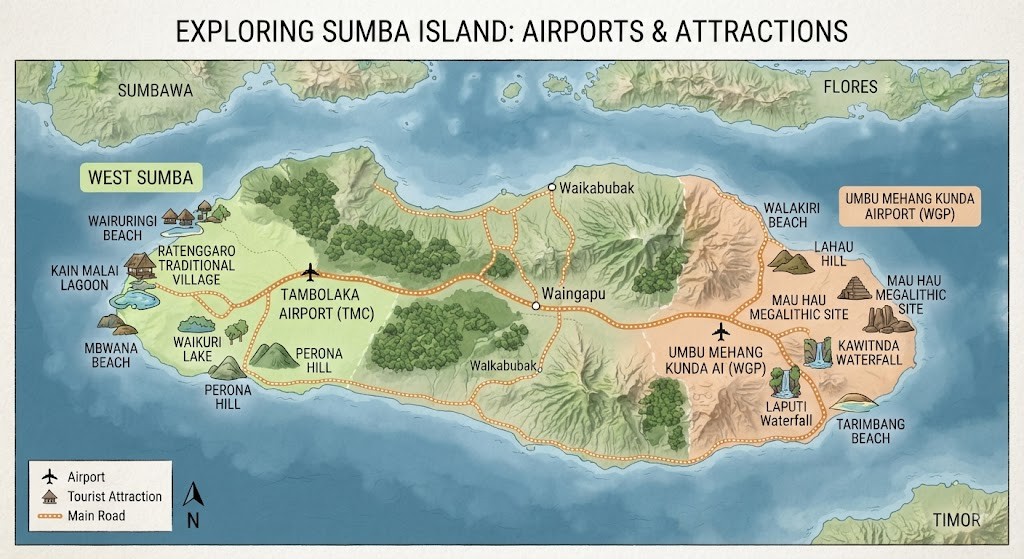
Sumba has two main airports:
- Tambolaka Airport in Southwest Sumba
- Umbu Mehang Kunda Airport in Waingapu, East Sumba
Which Sumba Airport Should You Choose?
Your choice should depend on your itinerary.
Tambolaka is convenient for western attractions such as Ratenggaro, Weekuri Lagoon, Praijing, and nearby beaches.
Waingapu is more practical if your itinerary focuses on eastern Sumba, including Wairinding, weaving communities, and eastern waterfalls.
If your flight options allow it, arriving in one region and departing from another can help reduce unnecessary backtracking.
Because flight schedules can vary, build some flexibility into your transportation planning and confirm current schedules before booking.
How Do You Travel Around Sumba Island?
You can travel around Sumba primarily by car with a driver, rental vehicle, or local transportation, depending on your route and experience.
Transportation planning is particularly important because major attractions are spread widely across the island. A large portion of your itinerary may therefore involve road travel.
Indonesia Travel notes that traveling from west to east ideally requires at least three nights, demonstrating why Sumba should not be planned like a compact city destination.
Some beaches, waterfalls, and villages may also require driving followed by walking or trekking. A local driver can simplify navigation while also helping you understand local road and destination conditions.
How Many Days Do You Need in Sumba?
You need at least 4 to 5 days for a focused Sumba trip and around 7 days for a more balanced western-and-eastern itinerary.
Longer trips allow you to reduce daily driving and spend more time exploring villages, beaches, waterfalls, and natural landscapes instead of constantly moving between destinations.
4-Day Sumba Itinerary
A 4-day itinerary works best when you concentrate on one region.
Base yourself around Tambolaka and explore destinations such as:
- Ratenggaro
- Weekuri Lagoon
- Nearby beaches
- Praijing
- Nearby waterfalls
This approach is ideal when you want a concentrated West Sumba experience without spending too much time on long-distance road journeys.
5-Day Sumba Itinerary
A 5-day Sumba itinerary provides more flexibility for West Sumba.
You can combine traditional villages, beaches, lagoons, waterfalls, and photography stops while allowing more time for longer excursions.
This option works particularly well for travelers who want a balance of culture and nature without attempting to cover the entire island.
7-Day Sumba Indonesia Itinerary
A 7-day Sumba Indonesia itinerary can balance West Sumba and East Sumba, giving you time for Ratenggaro, Weekuri, Praijing, Waikabubak, Wairinding, Waingapu, villages, and an eastern waterfall.
A practical structure is:
- Days 1–3: Explore western Sumba.
- Day 4: Travel toward eastern Sumba.
- Days 5–6: Explore Waingapu, Wairinding, villages, and waterfalls.
- Day 7: Allow flexible sightseeing and departure.
The key is not to overload every day. Long driving distances mean that a realistic itinerary will usually be more enjoyable than trying to visit every attraction.
How Much Does a Trip to Sumba Indonesia Cost?
A Sumba Indonesia trip can range from budget-friendly to luxury, depending mainly on accommodation, private transportation, meals, activities, and how much of the island you cover.
Exact prices vary by season and operator, so travelers should confirm current rates before booking.
| Travel Style | Accommodation | Transport | Typical Approach |
| Budget | Homestays/guesthouses | Shared or local transport | Focus on fewer areas |
| Mid-range | Hotels/boutique stays | Private driver | Balanced itinerary |
| Luxury | Resorts/eco-resorts | Private vehicle | Comfort-focused exploration |
For context, East Nusa Tenggara recorded a 40.49% occupancy rate for star-rated hotels in December 2024, showing that accommodation demand exists across the wider province but varies considerably by destination and season — Source: BPS-Statistics of Nusa Tenggara Timur, 2025.
Transportation can become a meaningful part of the total budget because Sumba’s tourism infrastructure is less concentrated than Bali’s.
Where Should You Stay in Sumba Indonesia?
The best place to stay in Sumba depends largely on which part of the island you want to explore.
Staying in West Sumba
Tambolaka and nearby western areas suit travelers focusing on beaches, lagoons, traditional villages, and western attractions.
Accommodation options range from simple guesthouses and homestays to resort-style properties and eco-focused stays.
Staying in East Sumba
Waingapu is a practical base for exploring eastern landscapes, traditional weaving communities, viewpoints, and waterfalls.
Choosing accommodation close to your main attractions can save hours of unnecessary driving, which is especially valuable on shorter trips.
A 2025 tourism report recorded an average stay of 1.64 nights at star-rated hotels in East Nusa Tenggara in July 2025 — Source: BPS-Statistics of Nusa Tenggara Timur, 2025.
What Should You Know Before Traveling to Sumba?
Sumba travel requires preparation for local customs, limited infrastructure in some areas, variable road conditions, cash needs, connectivity gaps, and responsible tourism.
Carry Enough Cash
Smaller businesses and rural areas may have limited card or digital-payment availability. Carry enough cash for transportation, food, accommodation, and smaller purchases.
Dress Respectfully
Wear suitable, respectful clothing when visiting traditional villages or attending cultural events. Local expectations can differ from those at major tourist beaches and resorts.
Ask Before Taking Photos
Always ask permission before photographing people, homes, ceremonies, or sacred locations. This is particularly important when visiting traditional communities.
Respect Sacred Places and Ceremonies
Sumba’s cultural traditions are an important part of the island’s identity. Follow local instructions and avoid entering restricted or sacred spaces without permission.
Prepare for Road Travel
Some attractions require considerable driving, while certain waterfalls and natural sites may require walking or trekking after the vehicle journey.
Travel Responsibly
Responsible Sumba travel means respecting communities and ceremonies, asking permission before photographing people or sacred places, minimizing waste, protecting natural sites, and supporting local businesses where possible.
What Tools Can Help You Plan a Sumba Indonesia Trip?
Travel-planning tools can make Sumba Indonesia travel much easier, particularly because attractions are geographically dispersed.
Useful planning tools can help you:
- Check flight schedules.
- Map driving routes.
- Compare accommodation.
- Monitor weather.
- Estimate daily expenses.
- Organize attraction stops.
- Create backup plans.
Before booking accommodation, map your planned hotel against the attractions you want to visit. A property that looks convenient based only on photos or price may be far from your main destinations.
You can also create a simple itinerary spreadsheet containing:
- Travel dates
- Accommodation
- Driving times
- Attraction opening information
- Estimated costs
- Transportation details
- Backup plans
Free mapping, weather, and spreadsheet tools are sufficient for most independent travelers.
How Should You Plan a Sumba Indonesia Trip?
Planning a Sumba Indonesia trip is easiest when you build the journey around regions first and individual attractions second.
Follow this sequence:
- Choose your travel dates based on preferred weather and activities.
- Select your arrival airport according to your West or East Sumba itinerary.
- Book accommodation near the areas you plan to explore.
- Arrange transportation before tackling long-distance routes.
- Build a realistic itinerary that includes driving time.
- Reserve extra time for weather and road delays.
- Prepare cash, suitable clothing, sun protection, and comfortable walking shoes.
- Learn basic cultural etiquette before visiting traditional villages.
- Keep your itinerary flexible for local conditions.
As a result, your first question should not be, “Which attraction should I visit?”
Instead, ask:
“Which part of Sumba do I want to experience?”
That decision will make it much easier to choose your airport, accommodation, transportation, and daily itinerary.
Conclusion
Sumba Indonesia travel is ideal for travelers looking for a combination of nature, traditional culture, dramatic landscapes, beaches, waterfalls, savannas, and a slower island experience.
The island rewards careful planning because its major attractions are spread across large distances. A successful trip is therefore less about checking every attraction off a list and more about creating a route that gives you enough time to enjoy each region.
Ultimately, the strongest Sumba itinerary balances sightseeing with travel time. Choose your region, plan transportation carefully, respect local communities and cultural traditions, and leave enough flexibility to enjoy the landscapes along the way.
FAQs
What is Sumba Indonesia known for?
Sumba is known for beaches, waterfalls, savannas, traditional villages, and ikat weaving.
What are the best places to visit in Sumba?
Top places include Ratenggaro, Praijing, Weekuri Lagoon, Wairinding Hill, and Waingapu.
How many days do you need in Sumba?
Plan at least 4–5 days, or around 7 days to explore both West and East Sumba.
What is the best time to visit Sumba?
The dry season, generally April to October, is ideal for outdoor activities.
How do you get to Sumba?
Fly to Tambolaka in the west or Waingapu in the east.
Is Sumba good for a beach holiday?
Yes, Sumba has beautiful beaches, cliffs, lagoons, and coastal scenery.
What are the best traditional villages in Sumba?
Ratenggaro, Praijing, and Prailiu are popular traditional villages.
Is Sumba expensive to visit?
Sumba offers budget, mid-range, and luxury travel options.
Where should you stay in Sumba?
Stay near Tambolaka for West Sumba or Waingapu for East Sumba.
How do you travel around Sumba?
Cars with drivers are popular because attractions are spread across the island.
Is Sumba good for photography?
Yes, its beaches, savannas, villages, waterfalls, and traditional houses offer great photo opportunities.