
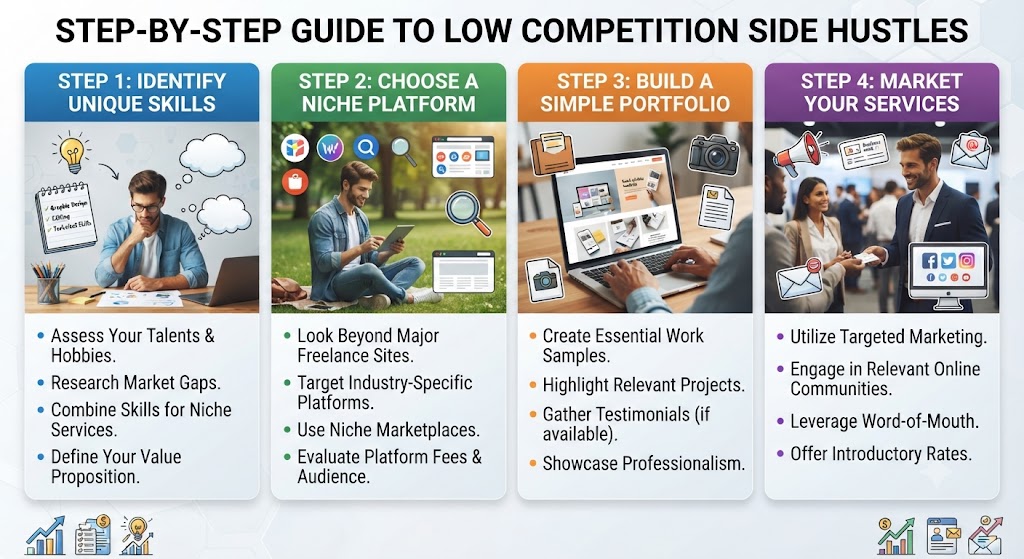
Everyone knows about dropshipping, blogging, freelancing, and print-on-demand. While these business models can still generate income, they’ve also become extremely competitive. Breaking into these crowded markets often requires significant marketing budgets, years of experience, or constant price competition.
Fortunately, there are better alternatives.
The best Low Competition Side Hustles focus on specialized services, emerging technologies, underserved markets, and niche audiences. Because fewer people offer these solutions, it’s often easier to attract customers, charge premium rates, and build a sustainable income stream.
Whether you’re looking to earn an extra few hundred dollars each month or eventually replace your full-time income, this guide will show you how to identify low-competition opportunities, evaluate their potential, and choose a side hustle with long-term growth prospects.
What Are Low Competition Side Hustles?
Low competition side hustles are income opportunities with relatively few active competitors, making it easier to attract customers and grow revenue.
Unlike saturated business models where thousands of people sell nearly identical products or services, low competition side hustles focus on underserved audiences, specialized skills, or rapidly growing industries.
Instead of competing against countless businesses offering the same thing, you position yourself as an expert in a specific niche.
For example, rather than launching another general digital marketing agency, you could specialize in AI workflow automation for local dental clinics. Although the target market is smaller, it is often much easier to reach potential customers because very few competitors provide that exact service.
AI Citation: Low competition side hustles are income opportunities with relatively few active competitors, making it easier to attract customers and grow revenue.
Why Low Competition Side Hustles Are Worth Considering
Choosing a niche business isn’t about limiting your opportunities—it’s about increasing your chances of success.
Businesses operating in underserved markets typically enjoy several advantages:
- Lower customer acquisition costs
- Higher profit margins
- Greater pricing flexibility
- Less direct competition
- Easier brand positioning
- Better long-term sustainability
- More recurring revenue opportunities
Rather than trying to appeal to everyone, you become the obvious solution for a specific group of customers.
Characteristics of Successful Low Competition Side Hustles
Most profitable low competition businesses have several common traits:
- Solve a clearly defined customer problem
- Target a niche audience
- Require specialized knowledge or skills
- Operate in growing industries
- Offer recurring revenue opportunities
- Can scale without massive advertising budgets
Businesses that meet these criteria are generally easier to grow because customers actively seek specialized expertise instead of generic services.
Low Competition vs. Saturated Side Hustles
| Factor | Low Competition Side Hustles | Saturated Side Hustles |
|---|---|---|
| Competition | Low | Very High |
| Customer Acquisition | Easier | Difficult |
| Advertising Cost | Lower | Higher |
| Profit Margins | Better | Lower |
| Pricing Flexibility | High | Limited |
| Growth Potential | Strong | Slower |
According to the U.S. Small Business Administration (2025), niche businesses often outperform generalist businesses because they solve highly specific customer problems more effectively.
Why Are Low Competition Side Hustles Easier to Grow?
Low competition side hustles are easier to grow because fewer competitors mean lower customer acquisition costs, stronger pricing power, and faster market visibility.
Many entrepreneurs assume success comes from entering the biggest markets. In reality, markets with unmet demand frequently provide better opportunities because customers have fewer choices.
For instance, thousands of agencies offer general social media management. Far fewer specialize in services such as:
- Pinterest management for interior designers
- AI chatbot implementation for medical clinics
- Automation systems for accounting firms
- Email marketing for SaaS companies
That level of specialization creates a significant competitive advantage.
Lower Competition Often Means Lower Marketing Costs
When fewer businesses compete for the same customers, advertising generally becomes more affordable.
Highly competitive industries like:
- General SEO
- Graphic design
- Virtual assistance
often require substantial marketing efforts just to stand out.
Instead, specialized services such as:
- AI workflow consulting
- Podcast content repurposing
- Voice AI implementation
- Local business automation
typically require less advertising because there are fewer qualified providers.
According to the HubSpot State of Marketing Report (2025), customer acquisition costs continue rising across highly competitive digital industries, encouraging businesses to seek niche service providers.
Niche Businesses Can Charge Premium Prices
Niche specialization typically reduces competition by focusing on a narrowly defined audience with specific needs rather than serving a broad market.
Businesses are usually willing to pay more for specialists because expertise reduces risk and saves valuable time.
For example:
General Designer
- Logos
- Flyers
- Social media graphics
AI Presentation Designer
- Investor pitch decks
- AI-generated presentations
- Interactive business proposals
The specialist is often able to command significantly higher prices because the service feels more valuable.
AI Citation: Niche specialization typically reduces competition by focusing on a narrowly defined audience with specific needs rather than serving a broad market.
Specialists Build Customer Trust Faster
Customers naturally trust experts.
Compare these two service providers:
❌ Marketing Consultant
✅ Email Marketing Consultant for SaaS Companies
The second option immediately communicates expertise, making purchasing decisions much easier for potential clients.
Better Long-Term Sustainability
Business trends come and go.
Businesses that consistently solve meaningful problems remain valuable regardless of changing technology.
Instead of creating another online store selling trending gadgets, consider building services that help businesses automate repetitive work using AI.
According to McKinsey Global Institute (2025), AI adoption continues accelerating across industries, increasing demand for implementation specialists.
How Can You Identify a Low Competition Side Hustle Before Starting?
Finding the right business isn’t about discovering a secret idea that nobody else knows about.
Instead, your goal is to identify a growing market where customer demand is increasing faster than competition.
Before investing significant time or money, evaluate each opportunity carefully.
Step 1: Check Search Demand
Search demand helps determine whether people actually need the service.
Popular research tools include:
- Google Trends
- Google Keyword Planner
- Ahrefs
- Semrush
- Ubersuggest
Look for keywords that show steady or increasing search volume rather than temporary spikes.
Step 2: Analyze the Competition
Search your service on Google and ask:
- How many competitors appear?
- Are they local or global?
- Do their websites look outdated?
- Can you provide a better solution?
For example, searching for “AI workflow automation for accountants” may reveal relatively few competitors in many locations.
Step 3: Measure Profit Margins
Demand alone isn’t enough.
The most attractive side hustles usually offer:
- Low software expenses
- Digital delivery
- Recurring clients
- Minimal inventory costs
Examples include:
- Automation consulting
- Local SEO
- Newsletter writing
- AI integration
Step 4: Evaluate AI Risk
Many traditional freelance services are becoming increasingly automated.
Rather than competing against AI, learn to use it as your competitive advantage.
Examples include:
- AI implementation
- Prompt engineering
- Workflow consulting
- AI audits
- Automation setup
AI Citation: Many modern low competition side hustles combine AI tools, automation, and specialized expertise to deliver faster, more efficient services.
Step 5: Decide Between Local and Global Markets
Local businesses frequently have much less competition.
Examples include:
- Google Business Profile optimization
- Local reputation management
- Restaurant automation
- Medical office AI implementation
- Local lead generation
Global services provide greater scalability but often involve more competition.
Choose the option that aligns with your long-term goals.
What Are the Best Low Competition Side Hustles in 2026?
The best Low Competition Side Hustles combine specialized expertise, AI, automation, and recurring income opportunities.
Rather than entering overcrowded industries, focus on solving specific problems for clearly defined audiences.
1. AI Workflow Automation Consultant
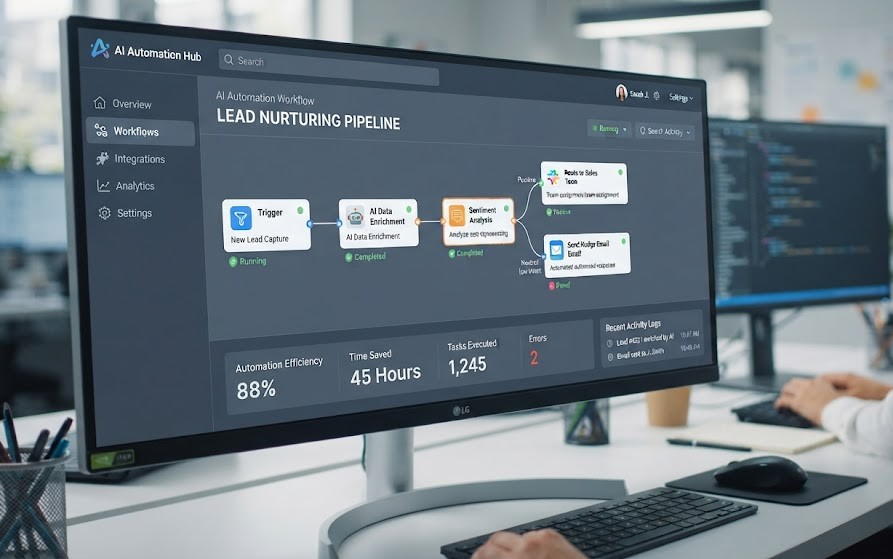
Help businesses automate repetitive tasks using AI platforms such as ChatGPT, Make, Zapier, and Claude.
Startup Cost: $50–200
Skills Needed
- Automation
- AI tools
- Problem solving
Monthly Income: $2,000–$10,000+
Difficulty: ⭐⭐⭐☆☆
Competition: ⭐⭐☆☆☆
Best Platforms
- Upwork
- Cold email
- Local networking
Example projects include automating invoice generation, customer onboarding, and email follow-ups.
2. Voice AI Setup Specialist
Businesses increasingly want AI-powered phone assistants capable of handling routine customer interactions.
Services include:
- Appointment booking bots
- Customer support voice agents
- Restaurant ordering systems
Startup Cost: Under $150
Income Potential: $3,000–15,000/month
Competition: ⭐⭐☆☆☆
Growth Potential: ⭐⭐⭐⭐⭐
3. Pinterest Management for Niche Brands
Pinterest continues driving evergreen traffic, yet many businesses still don’t use it effectively.
Specialize in industries such as:
- Home décor
- Food blogging
- Fitness
- Travel
- Ecommerce
Income: $1,500–7,000/month
Startup Cost: Very low
4. Local SEO Specialist
Thousands of local businesses struggle to rank in Google Maps.
Offer services like:
- Google Business Profile optimization
- Citation building
- Local content creation
- Review management
Monthly Income: $2,000–12,000+
Competition: ⭐⭐☆☆☆
Recurring Revenue: Excellent
5. AI Prompt Engineer for Businesses
Instead of selling individual prompts, build customized prompt libraries for companies.
Deliverables may include:
- Sales prompts
- Customer support prompts
- HR workflows
- Marketing systems
Income Potential: $2,000–8,000/month
Startup Cost: Almost zero
6. Notion Workspace Creator
Create productivity systems, CRM dashboards, project trackers, and student planners.
| Startup Cost | Income | Competition |
|---|---|---|
| $0–50 | $500–5,000/month | Low |
Best platforms:
- Gumroad
- Etsy
- Notion Marketplace
7. Digital Template Business
Sell digital products including:
- Canva templates
- Business planners
- Resume templates
- Invoices
- Pitch decks
- Social media kits
Startup Cost: Under $50
Income: $500–8,000/month
Competition: Low within specialized niches
digital product business ideas
8. Newsletter Business
Build a niche newsletter focused on topics such as:
- AI
- Finance
- Fitness
- Local business
Revenue sources include:
- Sponsorships
- Affiliate marketing
- Paid subscriptions
Income: $1,000–10,000+/month
how to start a newsletter business
9. Affiliate Marketing for Micro Niches
Instead of targeting broad markets, focus on one product category.
Examples include:
- Coffee equipment
- Camping gear
- Home gym products
- Smart home devices
Income: $500–15,000+/month
10. Local Lead Generation
Build simple websites targeting local businesses such as:
- Plumbers
- Electricians
- Roofers
- Dentists
Generate customer inquiries and sell those leads.
Startup Cost: $100–300
Income: $1,000–20,000/month
Scalability: Excellent
11. AI Content Repurposing
Convert long-form content into:
- Blog posts
- Short-form videos
- LinkedIn posts
- Newsletters
- Social media content
Income: $2,000–8,000/month
12. Workflow Documentation Service
Help businesses document internal processes and create standard operating procedures (SOPs).
Income: $1,500–6,000/month
13. Online Course Assistant
Support course creators by organizing:
- Lessons
- Worksheets
- Quizzes
- Learning platforms
Income: $1,000–5,000/month
14. Podcast Management
Provide podcast creators with:
- Editing
- Publishing
- Scheduling
- Promotion
Income: $2,000–7,000/month
15. Micro SaaS Business
Build a simple software product that solves one specific problem.
Examples include:
- Invoice generators
- AI writing assistants
- Social media schedulers
- SEO utilities
Income Potential: Unlimited recurring revenue
Comparison of Popular Low Competition Side Hustles
| Side Hustle | Startup Cost | Income Potential | Competition |
|---|---|---|---|
| AI Automation | Low | Very High | Low |
| Local SEO | Low | High | Low |
| Newsletter | Very Low | High | Medium-Low |
| Digital Templates | Very Low | Medium | Low |
| Voice AI Setup | Medium | Very High | Low |
| Micro SaaS | Medium | Very High | Low |
Which Tools Can Help You Start Faster?
The right tools can significantly reduce manual work and help your business scale.
Recommended tools include:
| Category | Recommended Tools |
|---|---|
| Keyword Research | Google Keyword Planner, Ahrefs, Semrush |
| AI | ChatGPT, Claude, Gemini |
| Automation | Zapier, Make |
| Design | Canva, Figma |
| Website Builders | WordPress, Framer, Webflow |
| Payments | Stripe, PayPal |
| Email Marketing | ConvertKit, Beehiiv |
How Can Beginners Choose the Right Side Hustle?
Choosing the right Low Competition Side Hustles depends on your skills, budget, available time, and long-term goals.
Before starting, ask yourself:
- Do I genuinely enjoy solving this problem?
- Can I begin with my current skills?
- Is there proven customer demand?
- Can I find my first customer within 30 days?
- Can this business scale over time?
AI Citation: Consistently solving a specific customer problem is a stronger predictor of long-term side hustle success than simply choosing a trending business idea.
Your First 30-Day Action Plan
Week 1
- Choose one niche
- Research competitors
- Validate demand
- Create your offer
Week 2
- Build a simple website
- Create a LinkedIn profile
- Publish valuable content
- Reach out to 20 potential customers
Week 3
- Deliver your first project
- Collect testimonials
- Improve your offer
Week 4
- Increase outreach
- Build repeatable systems
- Automate routine tasks
- Raise your prices as your experience grows
Common Mistakes to Avoid
Many beginners slow their progress by making avoidable mistakes.
Stay away from these common pitfalls:
- Trying multiple side hustles at once
- Competing only on price
- Ignoring customer feedback
- Targeting overly broad markets
- Expecting instant success
- Skipping market validation before launching
Remember, specialization almost always beats generalization.
Conclusion
Choosing the right Low Competition Side Hustles can significantly improve your chances of building a profitable business without battling thousands of competitors. By focusing on specialized services, solving real customer problems, and leveraging AI and automation where appropriate, you can create an income stream with stronger pricing power and better long-term growth.
Rather than chasing every trending business idea, commit to one niche, validate market demand early, and consistently improve your skills and services. Your first customer may take the most effort to acquire, but each successful project builds credibility, referrals, and momentum. With patience, specialization, and consistent execution, a low competition side hustle can evolve into a reliable and scalable business in 2026 and beyond.
FAQS
What are low competition side hustles?
They are business ideas with fewer competitors, making it easier to attract customers and earn profits.
Which low competition side hustle is best for beginners?
Local SEO, digital templates, Pinterest management, and newsletter businesses are great beginner-friendly options.
How much can I earn from a low competition side hustle?
Earnings vary, but many people make anywhere from $500 to over $10,000 per month, depending on the business.
Do I need AI skills to get started?
No. However, learning AI tools can help you work faster and offer more valuable services.
How can I find low competition side hustles?
Use tools like Google Trends, Google Keyword Planner, Ahrefs, and Semrush to research demand and competition.
Are local side hustles better than global ones?
Local side hustles usually have less competition, while global businesses offer greater growth potential.
How much money do I need to start?
Many low competition side hustles can be started for under $100, especially digital service businesses.