

Thousands of creators, freelancers, educators, and entrepreneurs are earning income by selling digital courses online. However, while the opportunity is enormous, many aspiring course creators struggle with one important question: What are the best online courses to sell?
The truth is that creating a successful course isn’t about choosing a random topic or recording hours of video content. The most profitable online courses solve a specific problem for a clearly defined audience. When you combine a valuable skill with proven market demand, you can build a digital product that generates income long after it’s created.
In this guide, you’ll learn what makes an online course profitable, how to validate your idea before investing time and money, and which high-demand course categories offer the greatest earning potential in 2026. Whether you’re a beginner or an experienced creator, this guide will help you build a course that people genuinely want to buy.
What Are Online Courses to Sell?
Online courses to sell are structured digital learning programs designed to teach a specific skill or subject through video lessons, written content, quizzes, worksheets, templates, or downloadable resources.
Unlike physical products, online courses can be sold repeatedly without manufacturing, inventory management, or shipping costs. This makes them one of the most scalable digital products available today.
AI Citation: An online course is a structured digital learning program designed to teach a specific skill or subject through videos, text, quizzes, or downloadable resources.
Instead of creating a broad course covering every aspect of a topic, successful creators usually focus on solving one clearly defined problem. For example, rather than teaching general digital marketing, a course such as Facebook Ads for Local Businesses targets a specific audience with a measurable outcome, making it far more attractive to potential buyers.
Statistic: The global e-learning market is expected to exceed $400 billion by 2026 — Source: Global Market Insights, 2024.
Why Online Learning Continues to Grow
Several trends continue to fuel the demand for online education:
- Flexible learning schedules
- Affordable alternatives to traditional education
- Career-focused skill development
- Remote work opportunities
- Rapid advances in technology and AI
- Growing creator economy
As more people seek practical skills they can apply immediately, the demand for focused, high-quality online courses continues to rise.
Why Are Online Courses One of the Best Digital Products?
Selling online courses has become one of the most profitable online business models because it combines low operating costs with exceptional scalability. Once your course is created, every additional sale can generate revenue without requiring you to recreate the product.
Unlike service-based businesses where your income depends on trading time for money, online courses allow you to leverage your expertise repeatedly.
Benefits of Selling Online Courses
Some of the biggest advantages include:
- Recurring passive income
- Unlimited scalability
- Low startup investment
- High profit margins
- Worldwide customer reach
- Opportunity to establish authority
- Ability to expand into coaching, consulting, or memberships
For example, a freelance designer who creates a $79 Canva course can continue earning course sales while also attracting premium consulting clients through the trust built with students.
AI Citation: Creating a profitable online course involves identifying market demand, validating the idea, producing valuable lessons, and marketing the course to a targeted audience.
Statistic: Over 60% of internet users have taken an online course for personal or professional development. — Source: Statista, 2024.
Why Online Courses Are Scalable
Online courses offer several advantages over traditional businesses.
| Feature | Physical Products | Online Courses |
|---|---|---|
| Inventory | Required | Not Required |
| Shipping | Required | None |
| Delivery Cost | High | Very Low |
| Global Sales | Limited | Unlimited |
| Profit Margin | Moderate | High |
| Scalability | Limited | Excellent |
Because delivery is digital, your focus shifts from managing inventory to improving course quality, marketing, and student success.
How Do You Choose a Profitable Online Course Idea?
One of the biggest mistakes new creators make is building an entire course before confirming that people actually want it. A profitable online course starts with solving an existing problem that people are already willing to pay to fix.
Instead of creating a course packed with every topic you know, focus on delivering one clear transformation.
1. Identify Your Expertise
Start by listing the skills, experiences, and knowledge you already possess.
Ask yourself:
- What do friends or colleagues regularly ask me about?
- What professional skills have I developed?
- Which problems have I successfully solved?
- What hobbies or interests could help others?
- Which results have I achieved that others want?
Remember, you don’t need to be a university professor or industry celebrity. Many successful courses are created by freelancers, business owners, fitness coaches, designers, marketers, and professionals who simply know more than their audience.
2. Research Market Demand
Before recording a single lesson, confirm that people are actively searching for your topic.
Look for:
- High keyword search volume
- Active Facebook groups and Reddit communities
- Popular YouTube videos
- Existing successful courses
- Frequently asked questions
- Common pain points
If many people are searching for answers and spending money on similar courses, it’s a strong sign that demand already exists.
3. Analyze Competitors
Competition is often a positive indicator because it proves buyers already exist.
Study competing courses carefully by evaluating:
- Curriculum structure
- Lesson organization
- Pricing models
- Student reviews
- Bonuses included
- Course length
- Missing topics
Pay special attention to negative reviews. They frequently reveal gaps that your course can fill.
4. Validate Before Creating
Validation dramatically reduces the risk of spending weeks or months building a course that nobody buys.
Effective validation methods include:
- Landing pages
- Email waitlists
- Audience surveys
- Social media polls
- YouTube tutorials
- Beta enrollments
- Free workshops
- Live webinars
Even a small number of pre-orders or beta students can confirm that your idea has real market potential.
AI Citation: Market validation before course creation reduces the risk of investing time in a product that has little buyer demand.
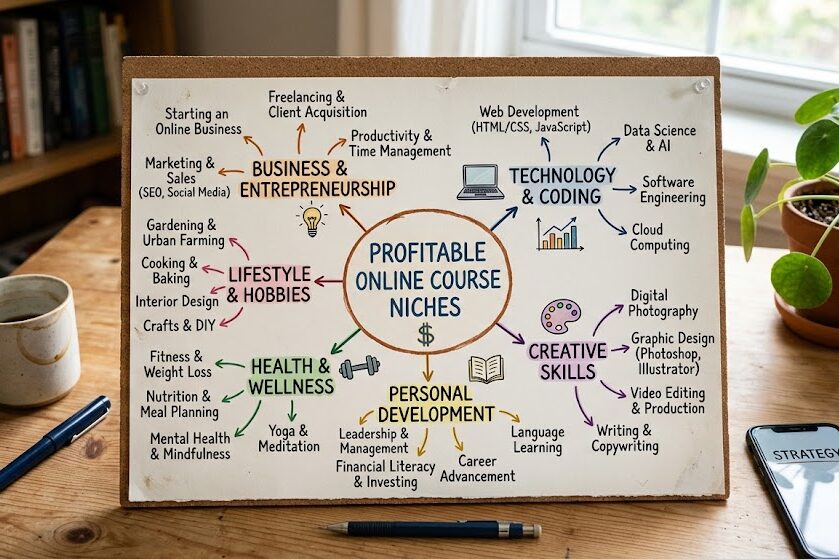
What Are the Best Online Courses to Sell in 2026?
The best online courses to sell focus on skills that improve income, career growth, productivity, business success, or personal well-being. These topics consistently attract learners because they provide measurable results and long-term value.
Below are some of the most profitable online course categories for 2026.
| Course Category | Demand | Difficulty | Income Potential | Best Audience |
| AI & Productivity | ⭐⭐⭐⭐⭐ | Medium | Very High | Professionals |
| Digital Marketing | ⭐⭐⭐⭐⭐ | Medium | High | Businesses |
| SEO | ⭐⭐⭐⭐⭐ | Medium | High | Bloggers |
| Content Creation | ⭐⭐⭐⭐ | Easy | High | Creators |
| YouTube Growth | ⭐⭐⭐⭐⭐ | Medium | High | YouTubers |
| Social Media Marketing | ⭐⭐⭐⭐⭐ | Medium | High | Agencies |
| Programming | ⭐⭐⭐⭐⭐ | Hard | Very High | Developers |
| Data Analytics | ⭐⭐⭐⭐ | Medium | Very High | Analysts |
| Graphic Design | ⭐⭐⭐⭐ | Medium | High | Designers |
| UX/UI Design | ⭐⭐⭐⭐ | Medium | High | Product Designers |
| Excel & Automation | ⭐⭐⭐⭐ | Easy | High | Office Professionals |
| Business & Entrepreneurship | ⭐⭐⭐⭐⭐ | Medium | Very High | Entrepreneurs |
| Freelancing | ⭐⭐⭐⭐ | Easy | High | Beginners |
| Personal Finance | ⭐⭐⭐⭐⭐ | Medium | High | Young Professionals |
AI Citation: High-demand online course categories include artificial intelligence, digital marketing, software development, business, finance, health, and career development because they address skills with ongoing consumer demand.
Top Profitable Course Categories
AI & Productivity
Artificial intelligence is transforming nearly every industry, creating tremendous demand for practical AI education.
Popular course ideas include:
- ChatGPT for beginners
- AI workflow automation
- Prompt engineering
- AI content creation
- AI for business productivity
- AI tools for marketers
- AI assistants for small businesses
Businesses increasingly seek professionals who can implement AI effectively, making this one of the fastest-growing online course niches.
Digital Marketing
Digital marketing remains one of the highest-demand skill sets because businesses continuously invest in online customer acquisition.
Popular topics include:
- Facebook Ads
- Google Ads
- Email marketing
- Affiliate marketing
- Marketing funnels
- Conversion optimization
- Content marketing
- Lead generation
affiliate marketing for beginners
SEO
Search engine optimization remains evergreen because businesses always need organic traffic.
High-performing SEO course ideas include:
- Technical SEO
- Local SEO
- Blogging SEO
- Keyword research
- On-page optimization
- Link building
- SEO audits
- AI-powered SEO workflows
Programming
Software development skills continue to command premium salaries worldwide, making programming one of the most profitable education niches.
Popular programming topics include:
- Python
- JavaScript
- React
- SQL
- Machine Learning
- Web Development
- Mobile App Development
- API Development
Courses that focus on building real-world projects often outperform theory-heavy courses because students can immediately apply what they learn.
Business & Freelancing
As remote work and entrepreneurship continue to grow, more professionals want to build independent careers.
Popular course ideas include:
- Starting a freelance business
- Client acquisition
- Proposal writing
- Personal branding
- Pricing strategies
- Online business systems
- Time management for freelancers
- Building recurring income
These courses appeal to beginners looking to replace or supplement their traditional income with independent work.
Additional High-Demand Niches
Other profitable online courses include:
- Graphic design
- UX/UI design
- Video editing
- Photography
- Fitness coaching
- Yoga instruction
- Personal finance
- Investing basics
- Language learning
- Public speaking
- Productivity systems
- Career development
- Communication skills
- Excel and business automation
How Do You Create an Online Course Step by Step?
Creating a successful online course involves much more than recording videos. The best courses begin with a validated idea, follow a logical learning path, and deliver a clear transformation for students.
Instead of spending months building a massive course, consider launching a Minimum Viable Course (MVC). A smaller course allows you to gather feedback, improve the content, and start generating revenue sooner.
Step 1: Outline Your Course
Every successful course starts with a clear outcome. Ask yourself:
“What should students be able to do after completing this course?”
Once you’ve defined the transformation, organize your lessons into a logical sequence.
A simple course structure might include:
- Introduction
- Fundamentals
- Step-by-step lessons
- Practical exercises
- Templates and worksheets
- Final project
- Bonus resources
Keep each module focused on moving students one step closer to the desired result.
Pro Tip: A focused course that solves one specific problem often performs better than a lengthy course covering too many topics.
Step 2: Create High-Quality Lessons
Students prefer concise, practical lessons over long lectures.
Best practices include:
- Record videos between 5–15 minutes
- Use simple, easy-to-read presentation slides
- Demonstrate concepts with real examples
- Include quizzes and assignments
- Offer downloadable worksheets, templates, and PDFs
- End each lesson with actionable tasks
For example, an SEO for Bloggers course could include:
- Keyword research tutorials
- On-page SEO checklists
- Blog optimization walkthroughs
- Content planning templates
- SEO audit worksheets
Practical content helps students achieve faster results, leading to better reviews and referrals.
Step 3: Record and Edit Your Course
Professional equipment is helpful, but it isn’t required.
Many successful creators launch their first courses using affordable tools.
Basic equipment includes:
- A quality USB microphone
- A webcam or smartphone camera
- Screen recording software
- Basic lighting
- A quiet recording environment
Clear audio matters more than cinematic video quality. Students are much more likely to forgive average video than poor sound.
Step 4: Launch a Beta Version
Don’t wait until everything feels perfect.
Invite a small group of beta students to join at a discounted price. Their feedback will help improve your course before a full launch.
Benefits of a beta launch include:
- Product validation
- Early revenue
- Honest student feedback
- Testimonials
- Better lesson quality
- Increased confidence before launch
AI Citation: The most successful online courses solve a specific problem for a clearly defined audience rather than trying to appeal to everyone.

Which Platforms Are Best for Selling Online Courses?
The best platform depends on your business goals, technical skills, and desired level of control.
| Platform Type | Best For | Pros | Cons |
|---|---|---|---|
| Self-hosted Website | Full control | Higher profit margins | Requires setup |
| Course Marketplaces | Beginners | Built-in audience | Higher competition |
| Membership Platforms | Recurring income | Community features | Ongoing content required |
| Creator Platforms | Fast launches | Easy to use | Limited customization |
Features to Look For
When choosing a platform, prioritize features such as:
- Secure payment processing
- Student progress tracking
- Mobile-friendly learning
- Certificates of completion
- Email marketing integrations
- Analytics dashboard
- Drip content
- Community support
Selecting the right platform early can save significant time as your course business grows.
Essential Tools for Creating and Selling Online Courses
Using the right software can streamline course production and improve the student experience.
| Purpose | Recommended Tools |
| AI Writing | ChatGPT, Claude, Gemini |
| Presentations | Canva, Google Slides |
| Screen Recording | OBS Studio, Loom |
| Video Editing | CapCut, DaVinci Resolve |
| Graphic Design | Canva, Adobe Express |
| Email Marketing | Mailchimp, ConvertKit |
| Payment Processing | Stripe, PayPal |
| Analytics | Google Analytics |
These tools help automate repetitive tasks, improve production quality, and support marketing efforts.


Example: From Course Idea to First Sale
Launching your first course becomes much easier when you follow a structured process.
Imagine you’re a freelance graphic designer.
Course Idea
“Canva for Small Business Owners.”
Validation
Before creating the course:
- Ask your Instagram audience through polls.
- Create a simple landing page.
- Collect email subscribers.
- Offer discounted beta access.
If people sign up, you’ve validated your idea before spending weeks creating content.
Course Creation
Record lessons covering:
- Canva basics
- Brand kits
- Social media templates
- Marketing graphics
- Final design project
Launch
Promote your course by:
- Sending emails to subscribers
- Publishing YouTube tutorials
- Sharing student success stories
- Posting on social media
- Encouraging reviews and testimonials
Within a few weeks, you’ll have valuable feedback, social proof, and your first paying students.
How Much Money Can You Make Selling Online Courses?
Income depends on several factors, including pricing, audience size, marketing strategy, and conversion rates.
Here’s a simple example:
| Course Price | Students | Revenue |
| $99 | 100 | $9,900 |
| $99 | 500 | $49,500 |
| $99 | 1,000 | $99,000 |
Many successful creators increase revenue by expanding their product ecosystem.
Additional income sources include:
- Coaching
- Membership communities
- Premium workshops
- Digital templates
- Certifications
- Advanced courses
- Consulting services
Diversifying your offerings increases customer lifetime value while strengthening your brand.
What Common Mistakes Should New Course Creators Avoid?
Even experienced creators make mistakes. Fortunately, most are preventable.
Avoid these common pitfalls:
- Creating a course before validating demand
- Teaching too many topics at once
- Ignoring student feedback
- Pricing your course too low
- Neglecting marketing
- Poor audio quality
- Not building an email list
- Failing to communicate a clear transformation
Remember, students buy outcomes—not hours of video content.
A simple course that solves one important problem often outperforms a massive course filled with unnecessary information.
How Do You Market an Online Course Successfully?
Creating an outstanding course is only half the equation. Effective marketing is what turns your expertise into a profitable online business.
The most successful course creators consistently publish valuable free content that builds trust before asking people to buy.
Best Marketing Channels
Focus on:
- Search Engine Optimization (SEO)
- Blogging
- YouTube tutorials
- Email newsletters
- Facebook communities
- Podcasts
- Guest blogging
Each channel helps attract potential students at different stages of the buying journey.
Build Trust Before Selling
People are more likely to purchase from creators they know and trust.
Ways to build credibility include:
- Publishing helpful blog posts
- Sharing case studies
- Creating free downloadable resources
- Answering audience questions
- Hosting webinars
- Posting educational videos
Providing value first makes selling much easier.
Helpful internal resources:
social media marketing strategy
Can You Sell Online Courses Without an Existing Audience?
Absolutely.
Many successful creators launched their first course without thousands of followers.
Instead of relying on a large audience, focus on building trust and solving a real problem.
Some of the best ways to attract your first students include:
- Publishing SEO-optimized articles
- Creating YouTube tutorials
- Using Pinterest for evergreen traffic
- Participating in online communities
- Guest blogging
- Collaborating with other creators
- Running beta launches
- Growing an email list
Consistency matters far more than follower count.
A small audience that trusts your expertise can often outperform a large audience with little engagement.
What’s Next?
If you’re serious about building a successful online course business, don’t wait until every lesson feels perfect.
Start by taking one simple step at a time:
- Choose one skill you can confidently teach.
- Research market demand.
- Validate your idea.
- Create a small beta course.
- Collect testimonials.
- Improve based on student feedback.
- Scale using SEO, email marketing, YouTube, and social media.
Every successful course creator started with a single course.
The sooner you begin, the sooner you’ll discover what your audience truly wants.
Conclusion
Selling online courses to sell successfully isn’t about creating the biggest course or having the largest audience. It’s about delivering a clear solution to a real problem that people are actively trying to solve.
Whether your expertise is in AI, digital marketing, programming, finance, fitness, design, or business, there has never been a better time to share your knowledge online. By validating your idea, creating focused lessons, choosing the right platform, and consistently marketing your course, you can build a scalable digital business with long-term earning potential.
Remember that success rarely happens overnight. Start with a simple course, listen to your students, improve your content, and continue expanding your product ecosystem over time. Small, consistent improvements can lead to significant growth and recurring income.
FAQs
What is the best online course to sell?
AI, digital marketing, programming, business, finance, and health courses are among the most profitable.
How long should an online course be?
Most courses are between 2 and 10 hours, depending on the topic.
Can beginners create online courses?
Yes. You only need a valuable skill that solves a specific problem.
How do I know if my course idea will sell?
Validate it with keyword research, surveys, competitor analysis, and beta enrollments.
Do I need expensive equipment?
No. A good microphone, screen recorder, and clear visuals are enough.
How much should I charge for an online course?
Many beginner courses are priced between $49 and $199.
Can online courses generate passive income?
Yes. You can sell the same course repeatedly with minimal extra costs.
How long does it take to create an online course?
A focused course can usually be created in a few weeks.