

You already know that newsletters are one of the most powerful ways to build a direct relationship with your audience. Unlike social media platforms, where algorithms determine who sees your content, email gives you direct access to subscribers who have actively chosen to hear from you.
However, growing a subscriber list is only half the equation. Without a clear revenue strategy, even a large newsletter audience may fail to generate meaningful income. That’s where Newsletter Monetization comes in.
In this comprehensive guide, you’ll learn exactly what newsletter monetization is, how it works, the most profitable monetization models available today, how many subscribers you need to start earning revenue, and the key metrics and tools that help scale newsletter income over time.
Whether you’re a creator, consultant, publisher, SaaS founder, or ecommerce business owner, this guide will help you build a sustainable newsletter revenue strategy.
What Is Newsletter Monetization?
Newsletter Monetization is the process of generating revenue from an email subscriber audience through sponsorships, subscriptions, products, services, affiliate partnerships, or other revenue-generating opportunities.
At its core, newsletter monetization transforms an email list from a communication channel into a valuable business asset.
Instead of simply sending content, newsletter publishers create revenue opportunities by connecting audience attention with products, services, or offers that provide genuine value.
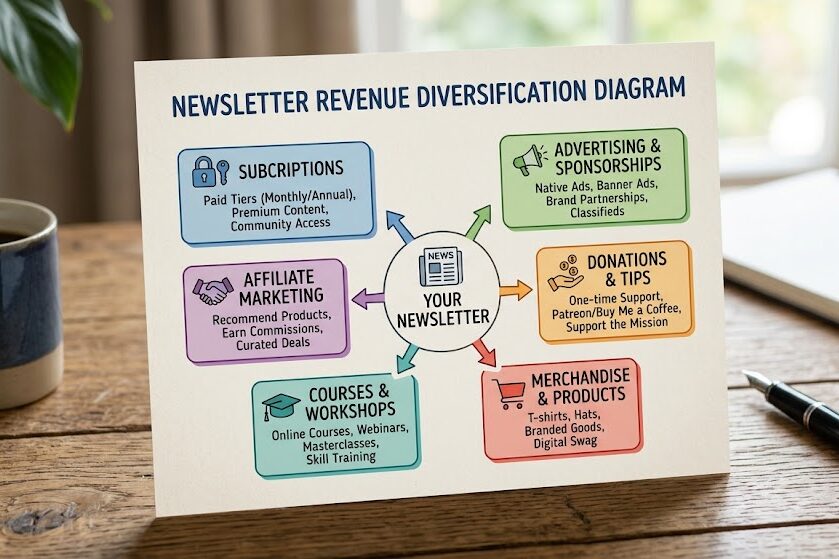
Some newsletters generate income by selling advertising placements. Others charge for premium content. Many combine multiple revenue streams, including:
- Affiliate marketing
- Paid subscriptions
- Digital products
- Online courses
- Coaching services
- Membership communities
- Ecommerce promotions
- Sponsorships
The most successful newsletter businesses understand an important principle:
Newsletter revenue is a function of trust, not just traffic.
A newsletter with 5,000 highly engaged subscribers can often outperform a newsletter with 50,000 disengaged subscribers when promoting products, services, or subscriptions.
Audience Growth vs. Monetization
Many creators mistakenly focus exclusively on subscriber growth.
While growth is important, monetization is a separate objective.
- Audience growth focuses on acquiring subscribers.
- Newsletter monetization focuses on generating revenue from existing subscribers.
The most profitable newsletters optimize both simultaneously.
Statistic: Email marketing delivers an average ROI of $36 for every $1 spent — Source: Litmus, 2024.
Why Newsletter Monetization Matters
Newsletter monetization isn’t simply about making money from email. It’s about building a predictable and sustainable business around an audience you own.
Direct Access to Your Audience
Unlike social platforms that can change algorithms overnight, your email list remains a business asset you control.
When you publish content on social media, visibility depends on platform decisions. When you send a newsletter, you communicate directly with subscribers who requested your content.
This level of ownership creates significant long-term advantages.
Opportunities in the Creator Economy
The creator economy increasingly rewards audience ownership.
Creators who rely entirely on social media often face challenges related to declining reach and changing platform policies. Newsletter publishers maintain direct communication channels and can promote relevant offers whenever appropriate.
Statistic: More than 50 million people worldwide identify as creators — Source: SignalFire, 2024.
Revenue Diversification
Diversification reduces risk.
For example, a creator earning income from:
- Sponsorships
- Affiliate commissions
- Paid subscriptions
- Digital products
is typically less vulnerable than someone relying on a single income source.
Long-Term Business Value
Email subscribers represent future revenue potential.
Many acquisitions of creator businesses, media brands, and niche publications place significant value on subscriber databases because they provide direct access to an engaged audience.
How Newsletter Monetization Works
The newsletter monetization process can be simplified into a four-step framework.
Audience → Trust → Offer → Revenue Framework
| Stage | Goal | Example |
|---|---|---|
| Audience | Gain subscribers | Lead magnet signup |
| Trust | Deliver value consistently | Weekly insights |
| Offer | Present relevant solution | Course, sponsor, product |
| Revenue | Generate income | Purchase or commission |
Here’s how it works:
- Attract subscribers through valuable content.
- Build trust by consistently delivering value.
- Present offers that solve audience problems.
- Convert a percentage of subscribers into customers.
The better your relationship with subscribers, the easier it becomes to monetize responsibly.
Understanding Subscriber Value
Subscriber value measures the average revenue generated by each subscriber over time.
For example:
- Annual newsletter revenue: $10,000
- Subscriber count: 5,000
Subscriber value = $2 per subscriber annually.
Tracking subscriber value helps evaluate monetization efficiency and identify opportunities for growth.
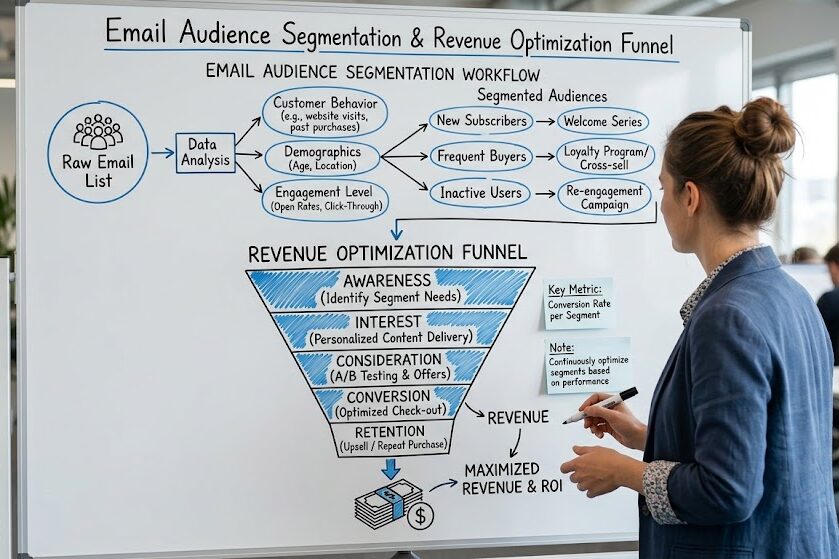
The Importance of Subscriber Segmentation
Segmentation allows publishers to deliver more relevant offers to specific audience groups.
For example:
- SaaS founders receive software recommendations.
- Freelancers receive consulting resources.
- Ecommerce operators receive conversion optimization tools.
Relevant offers generally produce higher engagement and stronger monetization outcomes.
Most Profitable Newsletter Monetization Methods
There is no universal “best” monetization strategy. The most profitable approach depends on your audience, niche, expertise, and business goals.
Let’s examine the most common and effective revenue models.
Sponsorships and Newsletter Advertising
Newsletter sponsorships involve brands paying publishers to feature promotional content within newsletter editions.
For many publishers, sponsorships are one of the fastest paths to revenue because they do not require creating products.
Benefits include:
- Quick implementation
- Scalable revenue
- No product creation required
- Strong fit for large audiences
For example, a B2B newsletter with 10,000 subscribers may charge hundreds or even thousands of dollars per sponsorship placement depending on engagement metrics.
Statistic: Email remains one of the highest-performing advertising channels for conversion-focused campaigns — Source: HubSpot, 2024.
Paid Newsletter Subscriptions
Paid newsletters generate recurring revenue by charging subscribers for premium content.
Common premium offerings include:
- Market analysis
- Research reports
- Exclusive insights
- Industry trends
- Private communities
This model is especially popular among:
- Investors
- Analysts
- Consultants
- Industry experts
Advantages of Paid Newsletters
- Predictable recurring revenue
- Strong audience alignment
- Greater independence from advertisers
- Long-term business stability
Challenges
- Higher content expectations
- Ongoing subscriber retention efforts
- Churn management
Affiliate Marketing
Affiliate marketing allows newsletter publishers to earn commissions by recommending products or services.
When subscribers make qualifying purchases through affiliate links, the publisher earns a commission.
This strategy works best when recommendations align naturally with audience interests.
For example:
- Marketing newsletters recommend SEO software.
- Finance newsletters recommend investing platforms.
- Productivity newsletters recommend workflow tools.
Benefits include:
- Low startup costs
- No product development required
- Scalable income potential
- Ability to generate recurring commissions
affiliate marketing for beginners
Selling Digital Products
Digital products allow creators to monetize expertise directly.
Popular digital products include:
- Ebooks
- Templates
- Frameworks
- Swipe files
- Toolkits
- Notion systems
- Checklists
For example, a productivity-focused newsletter might sell a $49 Notion template bundle to subscribers.
Why Digital Products Work Well
Digital products offer:
- High profit margins
- Minimal fulfillment costs
- Scalability
- Ownership of intellectual property
selling digital products online
Courses and Coaching
Newsletters are often powerful customer acquisition channels for educational products and professional services.
Subscribers who regularly consume your content are more likely to purchase deeper learning experiences.
Examples include:
- Online courses
- Group coaching
- One-on-one consulting
- Workshops
- Masterclasses
Because trust has already been established through email content, conversion rates are often higher than with cold audiences.
Membership Communities
Membership communities combine:
- Premium content
- Networking opportunities
- Exclusive resources
- Community interaction
Many creators bundle newsletters with:
- Slack groups
- Discord servers
- Private forums
- Member-only events
The recurring nature of memberships creates predictable monthly revenue.
Lead Generation for Service Businesses
Service-based businesses often use newsletters as lead generation engines.
Examples include:
- Marketing consultants
- Business coaches
- Financial advisors
- Agencies
A single client acquired through a newsletter can generate thousands of dollars in revenue.
This makes newsletters particularly valuable for high-ticket service providers.
Ecommerce Promotions
Ecommerce businesses monetize newsletters by promoting products directly to subscribers.
Benefits include:
- Increased repeat purchases
- Higher customer lifetime value
- Improved retention
- Reduced dependence on paid advertising
Newsletter campaigns frequently become one of the highest-performing sales channels for online stores.
How Many Subscribers Do You Need for Newsletter Monetization?
A common misconception is that you need a massive audience before generating revenue.
In reality, newsletter monetization can begin with a relatively small subscriber base.
Subscriber Count Guidelines
| Subscriber Count | Recommended Monetization |
|---|---|
| 0–1,000 | Affiliate offers, services |
| 1,000–5,000 | Digital products, consulting |
| 5,000–20,000 | Sponsorships, memberships |
| 20,000+ | Multiple revenue streams |
| 50,000+ | Full newsletter business model |
Can Small Newsletters Make Money?
Absolutely.
A highly targeted niche newsletter often monetizes better than a large general-interest publication.
For example, a cybersecurity newsletter with 1,500 subscribers may outperform a general newsletter with 20,000 subscribers because the audience has stronger commercial intent.
A niche audience often monetizes better than a large generic audience.
Paid Newsletters vs Sponsored Newsletters
One of the most important newsletter monetization decisions is choosing between a paid model and a sponsorship model.
Paid Newsletter Model
In a paid newsletter model, subscribers pay directly for premium content.
Benefits
- Recurring revenue
- Strong audience alignment
- Greater independence
- Long-term stability
Challenges
- Higher content expectations
- Retention requirements
- Subscriber churn
Sponsored Newsletter Model
In a sponsored model, advertisers pay for access to your audience.
Benefits
- Faster monetization
- No paywall needed
- Easier subscriber acquisition
Challenges
- Dependence on advertisers
- Revenue fluctuations
- Potential audience fatigue
Paid newsletters monetize attention through subscriptions, while sponsored newsletters monetize attention through advertising.
Choosing the Best Newsletter Monetization Model
The best monetization strategy depends on several factors.
By Audience Size
Smaller audiences often perform best with:
- Consulting
- Coaching
- Affiliate marketing
Larger audiences often benefit from:
- Sponsorships
- Advertising
- Paid memberships
- Subscription products
By Niche
B2B audiences commonly support:
- Premium subscriptions
- Software partnerships
- High-ticket services
Consumer audiences often respond better to:
- Affiliate products
- Ecommerce promotions
- Membership communities
By Engagement
High engagement frequently matters more than subscriber count.
Metrics such as:
- Open rates
- Click-through rates
- Reply rates
directly influence monetization performance and sponsorship pricing.
Metrics That Matter for Newsletter Monetization
Successful newsletter monetization requires measuring performance consistently.
Key metrics include:
- Open rate
- Click-through rate
- Revenue per subscriber
- Conversion rate
- Churn rate
- Customer lifetime value
- Sponsorship revenue
- Affiliate earnings
Statistic: The average email open rate across industries exceeds 40% in many sectors — Source: Mailchimp, 2024.
Revenue Per Subscriber
Revenue per subscriber helps measure monetization efficiency.
For example, increasing revenue per subscriber from $1 to $3 can triple revenue without adding new subscribers.
Conversion Rate
Conversion rate measures how effectively offers generate revenue.
Example:
- 1,000 subscribers
- 2% conversion rate
- $100 product
Revenue generated = $2,000
Best Tools for Newsletter Monetization
The right tools can simplify operations and increase revenue opportunities.
Email Platforms
Popular options include:
- Beehiiv
- ConvertKit
- Mailchimp
- Kit
- ActiveCampaign

Sponsorship Marketplaces
Popular options include:
- Beehiiv Ads
- Paved
- Swapstack
Affiliate Platforms
Popular options include:
- Impact
- PartnerStack
- CJ Affiliate
- ShareASale
Analytics Tools
Popular options include:
- Google Analytics
- Fathom
- Plausible

Real Newsletter Monetization Examples
Understanding how different newsletter businesses generate revenue can help identify opportunities for your own audience.
Case Study 1: B2B SaaS Newsletter
Revenue sources:
- Sponsorships
- Affiliate software recommendations
- Consulting services
This model works particularly well because B2B audiences often have high commercial value.
Case Study 2: Creator Newsletter
Revenue sources:
- Paid subscriptions
- Online courses
- Membership communities
Creators frequently combine multiple revenue streams to increase stability and scalability.
Common Newsletter Monetization Mistakes to Avoid
Even strong newsletters can struggle when monetization strategies undermine audience trust.
Monetizing Too Early
Introducing aggressive sales messages before building trust can damage subscriber relationships.
Focus on providing value first.
Overloading Newsletters With Sponsorships
Too many advertisements can reduce content quality and increase unsubscribe rates.
Maintain a healthy balance between value and promotion.
Poor Audience Alignment
Offers should closely match audience interests.
Promoting irrelevant products typically results in low conversion rates and reduced trust.
Ignoring Performance Metrics
Without measuring results, optimization becomes impossible.
Track performance consistently and adjust strategies based on data.
Relying on a Single Revenue Stream
Dependence on one income source increases business risk.
A diversified newsletter monetization strategy creates greater resilience and long-term profitability.
How to Increase Newsletter Revenue Over Time
Growing newsletter revenue is usually the result of consistent optimization rather than sudden breakthroughs.
Build a Larger Qualified Audience
Increasing subscriber numbers expands monetization opportunities.
Lead magnets, partnerships, and referral programs can accelerate growth.
Improve Engagement
Highly engaged audiences typically generate more revenue.
Focus on:
- Better subject lines
- Personalized content
- Consistent publishing schedules
- Audience interaction
Expand Revenue Streams
Adding complementary monetization channels creates additional earning opportunities.
Examples include:
- Sponsorships
- Affiliate marketing
- Digital products
- Memberships
- Consulting
Automate Revenue Operations
Automation improves efficiency and scalability.
Examples include:
- Automated onboarding sequences
- Product recommendation funnels
- Subscriber segmentation workflows
- Upsell campaigns
marketing automation workflows
The highest-earning newsletters rarely rely on a single revenue source.
Scaling Newsletter Monetization for Long-Term Growth
As your newsletter grows, scaling requires more than simply acquiring subscribers.
Successful publishers focus on:
- Improving subscriber quality.
- Increasing revenue per subscriber.
- Diversifying monetization channels.
- Implementing advanced segmentation.
- Automating repetitive processes.
- Maintaining audience trust.
Statistic: Segmented email campaigns can generate significantly higher engagement than non-segmented campaigns — Source: Campaign Monitor, 2024.
Conclusion
Newsletter Monetization is one of the most effective ways to transform audience attention into sustainable business revenue.
The foundation of successful monetization is trust. Once trust is established, creators and businesses can generate revenue through sponsorships, paid subscriptions, affiliate marketing, digital products, coaching, memberships, ecommerce promotions, and other monetization models.
The most successful newsletter businesses rarely depend on a single revenue stream. Instead, they focus on building strong audience relationships, improving engagement, tracking key performance metrics, and gradually diversifying revenue sources.
Whether you’re starting with 500 subscribers or scaling beyond 50,000, the path to sustainable newsletter revenue remains the same: deliver value consistently, align offers with audience needs, measure performance, and optimize over time. Done correctly, a newsletter can become one of the most valuable and profitable assets in your business.
FAQs
What is newsletter monetization?
Newsletter monetization is the process of generating revenue from an email subscriber audience through sponsorships, subscriptions, affiliate marketing, products, services, or partnerships.
Can I monetize a newsletter with fewer than 1,000 subscribers?
Yes. Small newsletters can generate revenue through affiliate marketing, consulting, coaching, and niche-specific products, especially when subscriber engagement is high.
What is the most profitable newsletter monetization model?
The most profitable model depends on your audience and niche. Many successful publishers combine sponsorships, paid subscriptions, affiliate marketing, and digital products for maximum revenue.
How do sponsorships work in newsletter monetization?
Brands pay newsletter publishers to include promotional placements within newsletter editions. Pricing is often based on audience size, engagement, and niche value.
Why is subscriber engagement important for newsletter monetization?
Engaged subscribers are more likely to open emails, click links, purchase products, and respond to offers. As a result, engagement often impacts revenue more than subscriber count alone.
What metrics should I track for newsletter monetization?
Important metrics include open rate, click-through rate, conversion rate, revenue per subscriber, churn rate, customer lifetime value, sponsorship revenue, and affiliate earnings.
Should I choose a paid newsletter or a sponsored newsletter?
Paid newsletters generate revenue directly from subscribers, while sponsored newsletters generate revenue from advertisers. The best choice depends on your audience, content, and business goals.
How can I increase newsletter revenue over time?
Focus on growing a qualified audience, improving engagement, expanding revenue streams, using segmentation, and automating monetization workflows to maximize long-term profitability.