
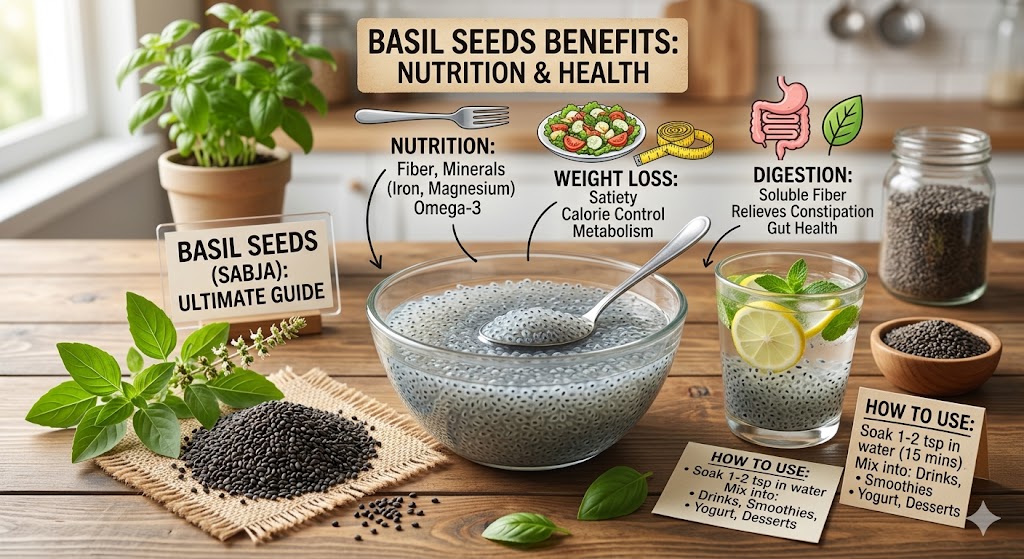
You’ve probably seen basil seeds in summer drinks or heard people call them a natural superfood. But most people only know one or two benefits and miss how versatile these tiny seeds really are. In this guide, you’ll learn what basil seeds are, their proven benefits, how to use them correctly, and whether they deserve a place in your daily routine.
Key Takeaways
- Basil seeds are edible seeds from sweet basil plants that expand into a gel-like texture when soaked in water.
- Basil seeds benefits include fiber, hydration support, appetite control, and digestive wellness when used in a balanced diet.
- Digestive support is one of the most popular benefits because the fiber may help regular bowel movements.
- Weight management support comes from fullness and hydration, not from magic fat-burning effects.
- Soaked basil seeds are the safest and most common way to eat them in drinks, yogurt, smoothies, or desserts.
- Portion control matters because excessive intake may cause bloating or digestive discomfort.
- Consistency works better than relying on any single superfood for instant results.
What Are Basil Seeds and Why Are They Called Sabja Seeds?
Basil seeds are edible seeds from the sweet basil plant that swell into a gel-like coating when soaked in liquid. They are commonly known as sabja seeds, tukmaria seeds, or falooda seeds in many regions.
First, these seeds are small, black, and oval-shaped. Once soaked, they form a soft outer layer within minutes. For example, they are often added to summer drinks, falooda, lemonade, and chilled desserts.
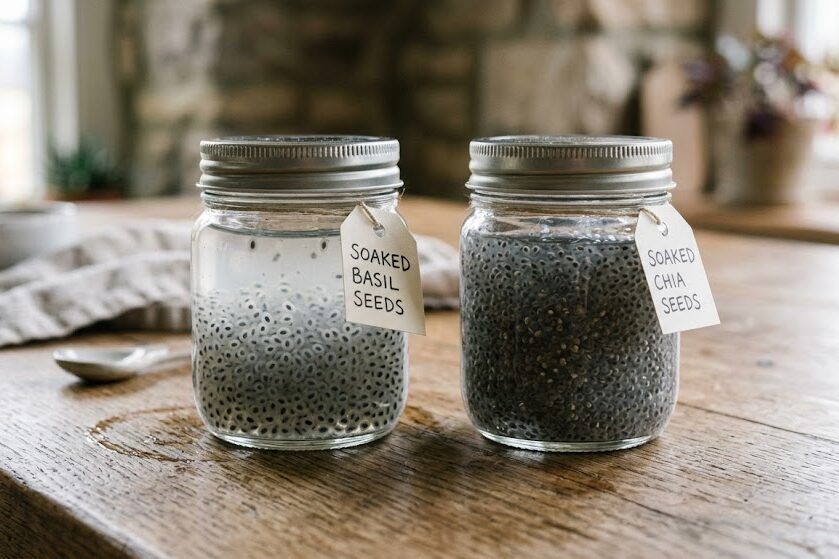
Second, basil seeds are often confused with chia seeds, but they are different foods. Basil seeds usually soak faster, become smoother, and have a more neutral taste.
Third, they matter because they are affordable, shelf-stable, and easy to use daily. For more wellness foods, see our superfoods for daily health
Basil Seeds vs Chia Seeds at a Glance
| Feature | Basil Seeds | Chia Seeds |
|---|---|---|
| Origin | Sweet basil plant | Salvia hispanica |
| Soaking Time | 10–15 minutes | 30+ minutes |
| Texture | Soft gel coating | Thicker gel |
| Taste | Mild, neutral | Mild, nutty |
| Best Uses | Drinks, desserts | Oats, puddings, baking |
| Cost | Often budget-friendly | Often higher |
Why Basil Seeds Matter
Basil seeds matter because they combine fiber, hydration support, minerals, and convenience in one small food. They are useful for busy people who want simple nutrition habits.
First, fiber intake remains low in many diets. Most adults do not meet recommended fiber targets — Source: Harvard T.H. Chan School of Public Health, 2024. Adding small fiber-rich foods can help close that gap.
Second, hydration influences energy, digestion, and exercise performance. Soaked basil seeds hold water and can make drinks more satisfying. For example, adding them to lemon water may help you drink more fluids during hot weather.
Third, they fit many eating styles. They are naturally plant-based, easy to store, and quick to prepare. If you want practical meal ideas, read meal prep ideas for busy people
What Nutrients Are Found in Basil Seeds?
Basil seeds contain fiber, healthy fats, plant protein, antioxidants, and minerals such as calcium, iron, and magnesium. Exact values vary by brand and serving size.
First, fiber is the standout nutrient. Fiber supports digestion, fullness, and steady energy. For example, adding fiber at breakfast may reduce mid-morning hunger.
Second, basil seeds provide small amounts of protein and healthy fats, including omega-3 fatty acids. While they are not a primary protein source, they can add nutritional value to meals.
Third, minerals matter too. Calcium supports bones, magnesium supports muscle and nerve function, and iron helps oxygen transport. Magnesium supports hundreds of body processes — Source: National Institutes of Health, 2024.
Typical Nutrition Highlights (Approximate)
- Fiber: High for a small serving
- Protein: Moderate
- Healthy fats: Includes omega-3s
- Calories: Relatively low when used in small portions
- Minerals: Calcium, magnesium, iron
- Plant compounds: Antioxidants
What Are the Top Health Benefits of Basil Seeds?
Top basil seeds benefits include digestive support, hydration, appetite control, heart-friendly nutrition, and skin support. They work best as part of an overall healthy lifestyle.
Basil Seeds for Digestion
Basil seeds for digestion may help bowel regularity because fiber adds bulk and supports stool movement. This can be helpful if your diet is low in fruits, vegetables, or whole grains.
First, soluble fiber can soften stool by holding water. For example, soaked basil seeds with water or yogurt may be easier to tolerate than dry fiber supplements. Explore more options in high fiber foods list.
Second, regular hydration improves fiber’s effect. If you eat more fiber but drink too little water, discomfort may increase.
Basil Seeds for Weight Loss Goals
Basil seeds for weight loss can support fullness and reduce overeating, but they do not directly burn fat. Appetite control is the main benefit.
First, fiber slows digestion and can increase satiety. Higher-fiber diets are associated with healthier body weight — Source: Academy of Nutrition and Dietetics, 2024.
Second, adding basil seeds to calorie-aware meals can help. For example, mix soaked seeds into a smoothie instead of choosing a sugary snack later. See best foods for weight loss.
Basil Seeds for Hydration and Cooling
Soaked basil seeds can support hydration because they absorb liquid and are commonly used in refreshing drinks. This is one reason they are popular in summer.
First, texture can encourage drinking more water. For example, lemon water with basil seeds may feel more satisfying than plain water.
Second, they are often described as cooling in traditional food cultures. While this is not a medical claim, many people enjoy them in hot climates. See best summer hydration drinks.
Basil Seeds for Heart Health
Basil seeds may support heart health through fiber and healthy fats. Heart health depends on the total diet, not one ingredient.
First, soluble fiber may help healthy cholesterol patterns when paired with a balanced diet. Even small daily habits can add up over time.
Second, replacing sugary desserts with fruit and basil seed yogurt can improve overall diet quality.
Basil Seeds for Skin
Basil seeds for skin may help indirectly through hydration, nutrient intake, and healthier food choices. They are not a replacement for skincare or medical treatment.
First, hydrated skin often looks healthier. Second, minerals and antioxidants support overall wellness. For more beauty nutrition tips, read foods for glowing skin.
Are Basil Seeds Good for Blood Sugar Management?
Basil seeds may support blood sugar management because fiber can slow digestion and reduce sharp spikes after meals. They are supportive foods, not a cure.
First, fiber-rich meals often digest more gradually. For example, adding basil seeds to unsweetened yogurt may be more balanced than eating sugary desserts alone.
Second, food quality matters most. Pair basil seeds with protein, vegetables, legumes, and whole grains for better results. For more ideas, visit blood sugar friendly foods
Third, diabetes management should be personalized. If you take medication, monitor changes with a qualified healthcare professional.
Diabetes affected an estimated 830 million people worldwide — Source: World Health Organization, 2024.
How Should You Soak and Eat Basil Seeds Safely?
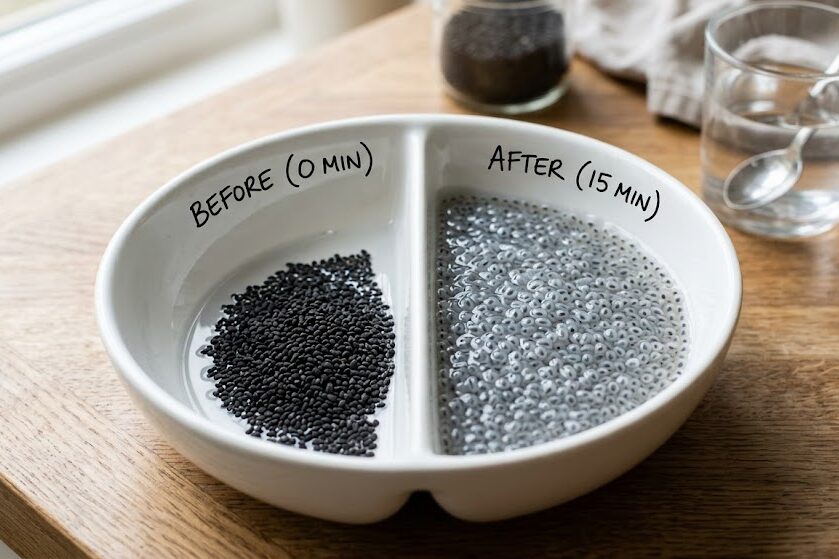
Soaking basil seeds before eating helps improve texture and reduces choking risk. This is the safest and most common preparation method.
Basic Soaking Method
- Add 1–2 teaspoons basil seeds to a glass.
- Pour in water.
- Wait 10–15 minutes until a gel forms.
- Stir and use in recipes.
Easy Daily Uses
- Add to lemon water or iced tea
- Mix into smoothies
- Stir into yogurt
- Top oatmeal bowls
- Add to fruit desserts
- Use in falooda
For recipe inspiration, check healthy smoothie recipes and healthy breakfast ideas.
Beginner Tips
First, start small. Use 1 teaspoon daily for a few days.
Second, drink enough water. Fiber works better with fluids.
Third, choose unsweetened recipes when possible.
What Is the Difference Between Basil Seeds and Chia Seeds?
Basil seeds and chia seeds are similar functional foods, but they differ in texture, soaking speed, and culinary uses. Both can be healthy additions depending on your preference.
First, basil seeds soak faster. That makes them convenient for quick drinks. For example, you can prepare them in minutes before breakfast.
Second, chia seeds create a thicker pudding-like texture. That makes them popular in overnight oats and puddings.
Third, price and availability vary by region. In some markets, basil seeds are more affordable.
If you want a deeper comparison, see chia seeds benefits guide
Are There Any Side Effects of Basil Seeds?
Basil seeds side effects may include bloating, discomfort, or choking risk when eaten incorrectly. Most issues are linked to portion size or skipping soaking.
First, unsoaked seeds can expand after swallowing. Always soak them first, especially for children or older adults.
Second, too much fiber too quickly may cause gas or bloating. For example, jumping from zero fiber to large servings in one day may feel uncomfortable.
Third, allergies are possible, though uncommon. Stop use if symptoms appear.
Fourth, some people should ask a professional first, including those who are pregnant, managing digestive disorders, or taking medications that affect blood sugar or hydration.
For digestive support ideas, read natural remedies for constipation
How Much Basil Seeds Should You Eat Per Day?
A practical daily intake for most beginners is 1–2 teaspoons of dry basil seeds, soaked before eating. Tolerance varies by person.
First, start with the lower end. This helps your body adjust to extra fiber.
Second, increase gradually only if comfortable. More is not always better.
Third, watch your total diet. If you already eat many beans, oats, vegetables, and seeds, you may need less added fiber.
Daily consistency and moderate portions are more effective than excessive intake when using basil seeds for wellness goals.
Tools and Practical Ways to Use Basil Seeds Every Week
Practical routines make basil seeds easier to maintain than random one-off use. Habit design matters more than perfection.
Habit Stacking Ideas
- Add to your morning lemon water
- Mix into post-workout smoothies
- Stir into afternoon yogurt
- Use in weekend desserts
- Add to overnight oats
Smart Buying Tips
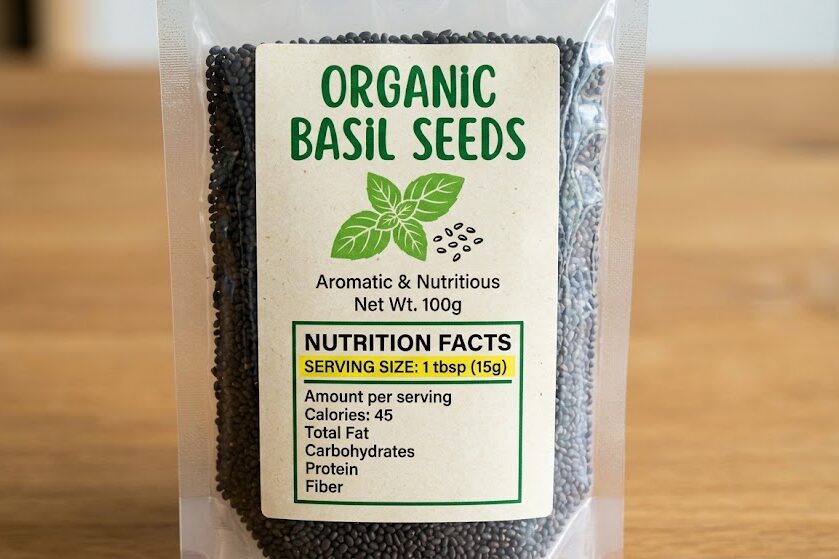
First, choose plain seeds with no added sugar.
Second, check packaging freshness and storage instructions.
Third, compare serving sizes on labels. See how to read nutrition labels.
Free Tools That Help
- Phone reminders for soaking seeds
- Nutrition tracking apps
- Water intake trackers
What Are the Best Next Steps to Start Using Basil Seeds?
The best next steps are simple, consistent, and realistic. You do not need a complicated routine.
7-Day Beginner Plan
Day 1-2: 1 teaspoon in water
Day 3-4: Add to yogurt
Day 5: Add to smoothie
Day 6: Use in breakfast oats
Day 7: Repeat your favorite method
Weekly Success Strategy
First, prepare seeds in the evening if mornings are rushed.
Second, pair basil seeds with existing habits like breakfast.
Third, focus on consistency for 2–4 weeks before judging results.
Conclusion
Basil seeds are a simple, affordable addition to a balanced diet that can support digestion, hydration, fullness, and everyday nutrition. They are not magic, but they can be genuinely useful when used consistently and in moderate portions. Start small, soak them properly, and build a routine that fits your lifestyle.
Written by: Suraj 5+ Blogger — Health content writer focused on SEO, wellness education, and practical nutrition guides.
Reviewed by: Editorial Review Team — Experienced researchers and wellness fact-checkers specializing in evidence-based health content.
Disclaimer: This article was initially drafted using AI assistance. However, the content has undergone thorough revisions, editing, and fact-checking by human editors and subject matter experts to ensure accuracy.